New findings by University of Florida Institute of Food and Agricultural Sciences researchers could help prevent more genetic strains of the potato- and tomato-killing late-blight pathogen from entering the United States.
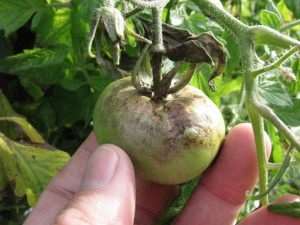
These findings may provide further evidence to help researchers solve the $6 billion-a-year disease that continues to evolve and torment potato and tomato growers around the world.
Erica Goss, a UF/IFAS assistant professor of plant pathology, who published a study in 2014 showing Toluca, Mexico as the origin of the late-blight pathogen, has now discovered the pathogen in other parts of Mexico. Goss and her team also found that each strain varies genetically.
Goss and her research team analyzed the genes of potato late-blight pathogens and found the pathogen in western Mexico (Michoacan, Mexico) differs genetically from the one in central (Toluca) and eastern Mexico (Tlaxcala and Puebla).
“This genetic difference allowed us to track the potential source of strains that show up in the U.S., just like genetic analysis of an American person of European ancestry would tell you if their family was more likely to have originated from western Europe or eastern Europe,” Goss said.
This finding could be crucial to helping feed more people, said Goss, who also is affiliated with the UF Emerging Pathogens Institute.
“What our study shows is that there is more potential trouble that could make its way here, replace the existing genetic types of the pathogen in the U.S., and affect disease control,” she said.
To increase U.S. food security, scientists should study the genetic variation in Mexico and try to track how the strains are coming to America so they can prevent future introductions, Goss said.
“By doing more extensive sampling across Mexico, we could do more to pinpoint the source of strains that are showing up in the U.S.,” she said.
In the 1840s, the late-blight pathogen caused the Irish Potato Famine, which killed most of that country’s potatoes. Today, it costs Florida tomato farmers millions each year in lost yield, unmarketable crop and control expenses.
A late-blight pandemic in 2009 made the pathogen a household term in much of the eastern U.S. It made its way to the Northeast via tomatoes in big-box retailers. After planting the tomatoes, many home gardeners and organic producers lost most, if not all, of their crop, Goss said.
Source: ufl.edu