By Aaron Wilson
Drought conditions continue to expand across Ohio. As of the latest U.S. Drought Monitor report on Thursday November 3, 2022, 86% of Ohio is abnomrally dry with 43% of the state classified as D1 or in Moderate Drought (Figure 1). West Central Ohio (centered on Darke County) has been particularly dry, only receiving about 25% of normal rainfall over the last 90 days. Dry conditions have dropped stream flows, diminshed soil moisture, hindered wheat and cover crop emergence, and contributed to numerous field and equipment fires across the region. Record highs in the upper 70s combined with gusty winds over this past weekend did little to help conditions. Over the past two months, several stations across Ohio (Akron, Dayon, Cincinnati, Columbus, Findlay, and New Philadelphia) have all experienced their top 5 driest streatches for this period. For the latest up-to-date conditions, seasonal outlooks, and monthly climate summaries, please visit the State Climate Office of Ohio.
Forecast

There is not much in the way of precipitation relief this week for the driest areas of the state. High pressure will remain in control through Thursday, before the combination of a strong cold front moving in from the west and tropical moisture surging northward ahead of the front could bring showers into the region on Friday. Much colder air, highs generally in the 30s and 40s and overnight lows in the 20s will follow for the weekend. Lake effect rain and snow will continue for the northeast as well. The Weather Prediction Center is currently forecasting up to 1.00” of precipitation across eastern counties of Ohio this week (Figure 2).
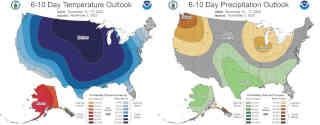
The Climate Prediction Center’s 6–10-day outlook for the period of November 13 - 17, 2022 and the 16-Day Rainfall Outlook from NOAA/NWS/Ohio River Forecast Center show a major weather pattern shift, with below normal temperatures likely but precipitation still leaning below average for the period (Figure 3). Climate averages include a high-temperature range of 52-56°F, a low-temperature range of 34-38°F, and average weekly total precipitation of 0.65-0.85 inches.
Crop Observation and Recommendation Network
C.O.R.N. Newsletter is a summary of crop observations, related information, and appropriate recommendations for Ohio crop producers and industry. C.O.R.N. Newsletter is produced by the Ohio State University Extension Agronomy Team, state specialists at The Ohio State University and the Ohio Agricultural Research and Development Center (OARDC). C.O.R.N. Newsletter questions are directed to Extension and OARDC state specialists and associates at Ohio State.
Source : osu.edu