By Gordon Johnson
Leaf scorch has been found in some sweet corn crops recently. Leaf scorch is a physiological disorder similar to necrotic sunburn in fruits and vegetables. It occurs when leaf temperatures rise above a critical level and cells die rapidly, leaving a bleached white appearance. While newly emerged leaves in the upper canopy of susceptible varieties that are the most exposed are the most likely to scorch, some of the leaf scorch can progress deeper into the canopy showing up on some of the corn husks, which will affect marketability. Leaf scorch occurs most commonly when temperatures are in the high 90s or over 100, skies are clear (high solar radiation), and humidity is low. While effect on yield is usually minimal, leaf scorch at the ear leaf level can affect kernel fill.
Leaf scorch has a genetic component as certain varieties of sweet corn are more susceptible. Overhead irrigation during high temperature hours can reduce this disorder.
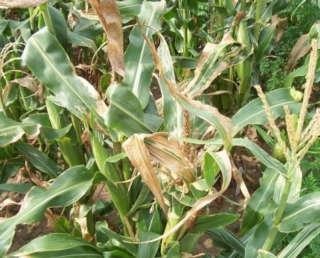
Leaf scorch in sweet corn affecting the upper canopy.
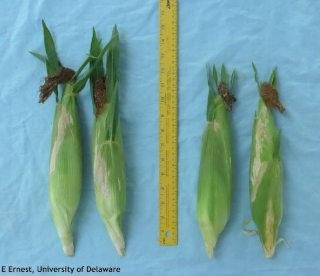
Leaf scorch affecting sweet corn husks.
Source : udel.edu