Site C is forcing Ken and Arlene Boon to move
By Diego Flammini
Assistant Editor, North American Content
Farms.com
A farm family from British Columbia’s Peace Valley is being forced from their home to make way for BC Hydro’s $8.8-billion Site C dam project.
Ken and Arlene Boon must move out by May 31 but will be allowed to continue farming the land for two years. Arlene is the third generation to live on the land and the couple lives in her grandfather’s home.
But the Boons did not sign over their farm voluntarily, forcing BC Hydro to take it from them.
“Arlene and I agreed we didn’t want to sign anything over. It just goes against every bone in our bodies. They’ll have to take it from us,” Ken said in an interview with DeSmog Canada.
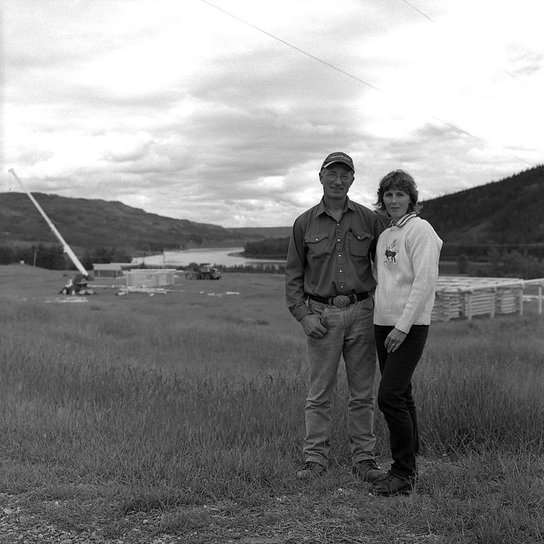
Ken and Arlene Boon
Photo: Peace Valley Landowner Association
"We were not able to come to a consensual agreement with the Boons and so we have acquired their property through expropriation," said Jessica McDonald, BC Hydro president and CEO, according to The Canadian Press.
The Site C project requires more than 5,500 hectares of land to be flooded along the Peace River. Site C will stretch 83 kilometres long and provide enough power for nearly 400,000 homes.
Ken said, in addition to displacing his family, the project will destroy precious farmland.
“This valley is a treasure and there’s no need to be doing this,” he told The Canadian Press. “It’s really a crying shame.”
“The biggest loss will be the Class 1 and 2 land,” Arlene said on Twitter.
Farms.com has reached out to the Boons for further comment, and to the BC Agriculture Council on the topic.