Julie Mortenson started the Classroom Cattle program to connect students with ag
By Diego Flammini
Staff Writer
Farms.com
A Canadian beef farmer has created a program to connect her farm with students across the country.
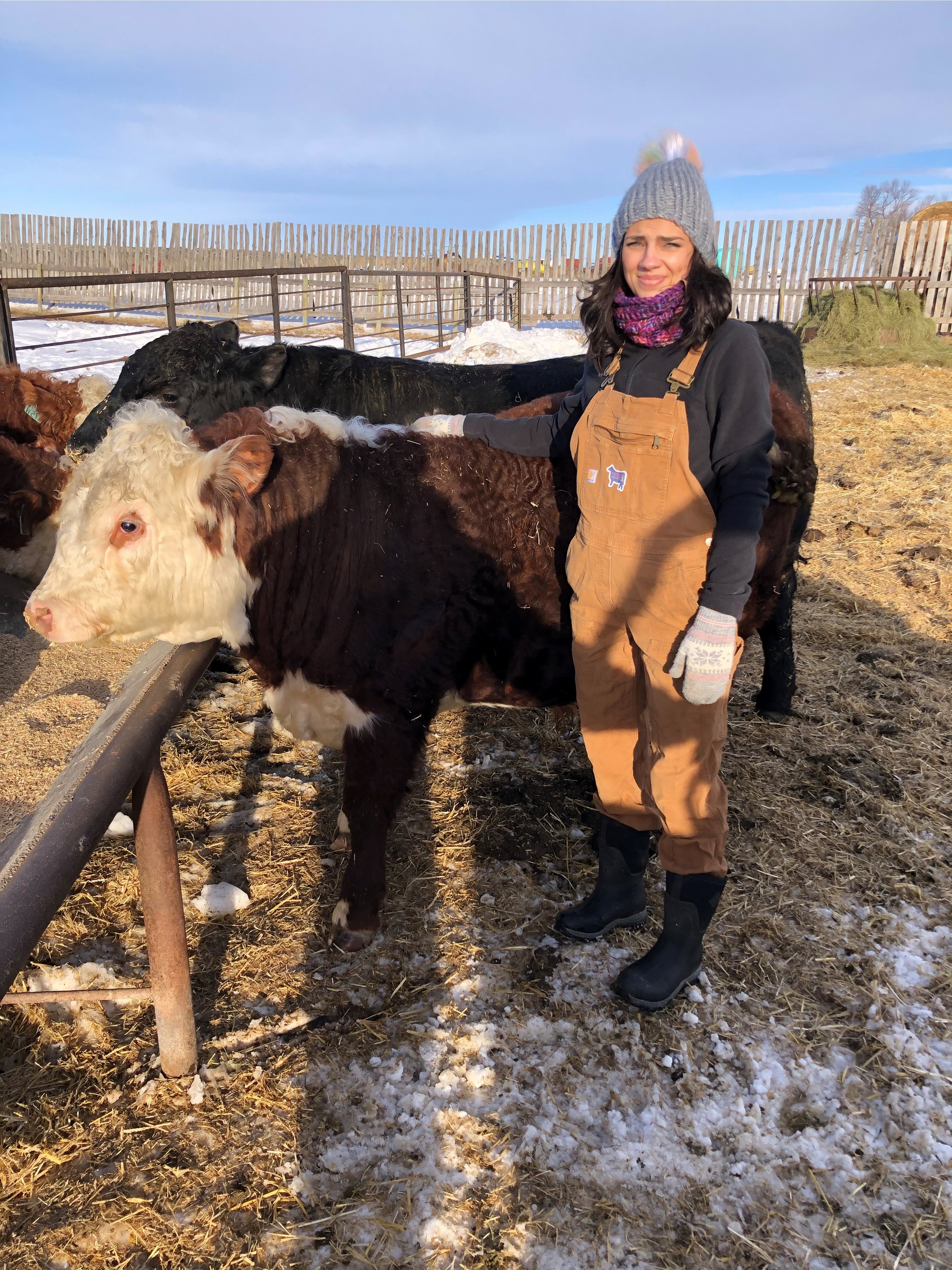
Julie Mortenson, who raises Hereford cattle with her husband and in-laws near Nokomis, Sask., launched the Classroom Cattle program in October to help tell the story of Canadian beef production.
“I decided to create a program that would connect Canadian teachers teaching pre-kindergarten to Grade 12 with cattle on our farm,” she told Farms.com. “The classes can virtually adopt one of the calves on our farm.”
The idea to start such a program came after seeing a U.S. farmer doing something similar.
“I saw on Facebook that a dairy farmer was offering to send classrooms a picture of a heifer calf and some other materials,” she said. “I saw that, thought it was a great idea but figured we could go even further with it if we did our own program.”
About 1,200 kids from rural and urban communities, different grades and provinces are part of Classroom Cattle’s inaugural year. The program wraps up at the end of May.
After the virtual adoption, Mortenson emails each teacher a package including a presentation about the farm for background information, monthly updates and pictures of the calf. The virtual adoption also includes a virtual visit to view the calf in real time.
In addition, Mortenson sends each classroom a physical package which includes items like pieces of cow hide, feed samples and ear tags.
The program teaches students about the beef industry overall, how their calf is cared for, what it eats, where it lives and how it fits into the food system and byproduct uses.
“I don’t want them to see the calf as just a pet, I want them to understand how beef production is run in Canada,” she said. “Our farm is a Verified Beef Production Plus ranch and I want to share a little more about what sustainable ranching is and why sustainability is important.”
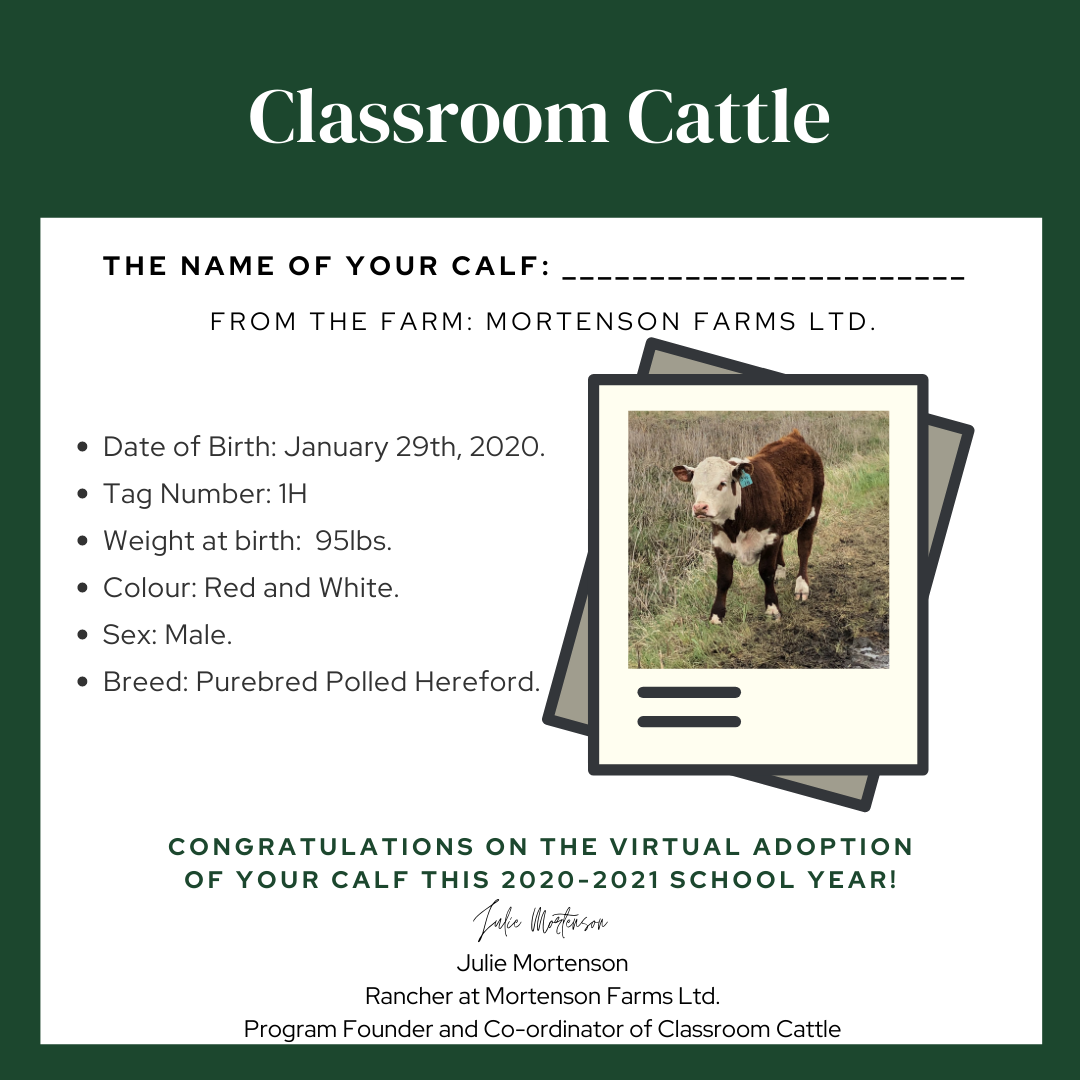
The program started with two cows – one heifer calf and one bull calf, which the students are encouraged to name. Some of the names for the bull calf include “Calfy Crisp,” “Big Red,” “Oreo” and “Steak.”
When interacting with a classroom, Mortenson uses the name the individual class gave to the calf to create a more personal environment.
Some of those conversations with classrooms, however, have been sensitive in nature.
The heifer calf passed away from bloat early in the program and Mortenson had to discuss that topic with the students.
“I was really hesitant to reach out to the classrooms to tell them what happened because I didn’t want them to be scared that all animals pass away like this,” she said. “But I wanted them to know we did everything we could to look after that animal. I answered any questions they had, and the students were really good about taking the news in stride.”
Mortenson is planning on running the Classroom Cattle program again for the 2021-22 school year.
Registration will open in September 2021. Any teacher interested in participating can download the sign-up sheet.