Current harvest levels are on par with last year’s numbers
By Diego Flammini
News Reporter
Farms.com
American farmers are beginning to harvest their corn crops, according to the United States Department of Agriculture’s (USDA) latest Weekly Weather and Crop Bulletin.
5 percent of the total U.S. corn crop has been harvested, which is consistent with the national harvest percentage recorded last year at this time.
On a state level, farmers in Texas have harvested 60 percent of their corn crop. That number is the highest among the 18 states recorded.
On the other hand, growers in Pennsylvania and Indiana have only harvested 1 percent of their corn crop.
Farmers in a number of states including Iowa, Missouri and Ohio have yet to begin corn harvest, according to the USDA’s report.
The USDA also ranked 48 percent of the U.S. corn crop as good.
Soybeans
The percentage of soybeans dropping leaves across the U.S. has doubled in one week, according to the USDA.
22 percent of the total American soybean crop has dropped its leaves, up from 11 percent last week. 24 percent of soybeans had dropped leaves at this time last year.

75 percent of the soybean crop in Louisiana has dropped its leaves, the most of any recorded state according to the USDA. That number is up from 64 percent a week before.
And only 3 percent of Wisconsin’s soybean crop has dropped its leaves, according to the USDA. That figure is the lowest among the 18 states documented.
USDA also ranked 49 percent of the total soybean crop as good.
Wheat
American farmers have completed 95 percent of the total U.S. spring wheat harvest, the USDA reports. That number is up from 89 percent last week.
Farmers in South Dakota have completed 99 percent of their spring wheat harvest, the most of the six states documented.
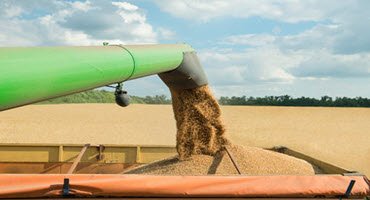
Growers in Idaho, Minnesota, Montana, North Dakota and Washington, have all completed more than 90 percent of their spring wheat harvest.
And as some farmers are harvesting their spring wheat, some are beginning to plant their winter wheat crop.
U.S. farmers have planted 5 percent of the total winter wheat crop, according to the USDA’s report.
Producers in Washington have planted 16 percent of their winter wheat crop, the most of the 18 states recorded.
Farmers in Oklahoma and Oregon have planted 1 percent of their winter wheat crop, while a number of other states have no planting recorded.
Fieldwork days
The states with the most suitable fieldwork days for the week ending Sept. 10, according to the USDA were:
- California, Nevada, Arizona, New Mexico, Colorado and Montana – 7
- Idaho, Wyoming, North Dakota, Nebraska, Kansas, Missouri and Illinois – 6.9
- Oklahoma and Iowa – 6.8
And the states with the fewest number of suitable fieldwork days were:
- New York – 4
- Pennsylvania – 4.5
- Kentucky – 5
- West Virginia and Ohio – 5.5
Weekly precipitation levels
State | Precipitation (inches) | Weather Station |
Illinois | 0 | N/A |
Indiana | 0.73 | South Bend |
Iowa | 0 | N/A |
Kentucky | 0.47 | Paducah |
Michigan | 1.52 | Traverse City |
Missouri | 0.01 | Saint Louis |
New York | 2.40 | Buffalo |
Pennsylvania | 3.71 | Erie |
Tennessee | 1.57 | Knoxville |
The next Weekly Weather and Crop Bulletin is scheduled for release on Tues., Sept. 19.