Thieves appear to have knowledge of crops
By Diego Flammini
Assistant Editor, North American Content
Farms.com
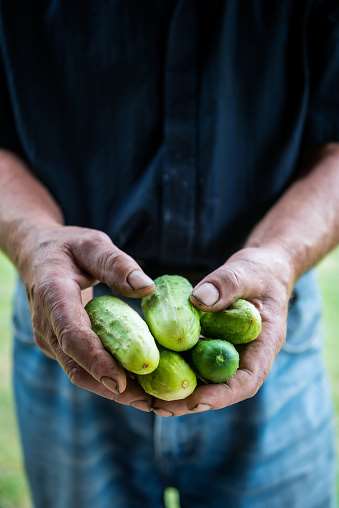
A Manitoba farmer is reeling after his cucumbers were stolen and tire tracks were seen in his field.
Erin Crampton, owner of Winnipeg’s Crampton’s Market, told CBC the affected farmer, whose identity she wouldn’t reveal, is one of her suppliers.
The farmer had about 500kg of cucumbers stolen throughout the season.
“People are getting cleaned out,” Crampton told CBC, adding the thieves are organized and have a knowledge about crops and growing seasons.
Getty
Crampton said her supplier has taken necessary measures including installing motion cameras, large fencing and a gate. These measures ultimately cut into the farmer’s bottom line.
“It’s absolutely devastating,” Crampton told CBC.
Thieves appear to be getting more confident, too.
Riverview Garden has seen produce stolen in daylight while gardeners are caring for local plots, the garden society’s president, Rod Kueneman, told CBC.
Kueneman said he has access to security footage and could use it to catch thieves if produce continues to be stolen.
Unfortunately, Manitoba farmers have been victims of theft a few times this year.
Sprague RCMP are currently investigating reports of stolen farm equipment near Woodridge, MB. Six baler rims, hydraulic hoses and a PTO shaft were stolen.
On June 21, Brandon RCMP were notified that a blue, 1965 Massey-Ferguson Model 65 was stolen from a farmyard near Elton, MB.