Auction was held on April 25
Farms.com Auction Report
By Farms.com Media
An auction hosted by Ritchie Bros. Auctioneers on April 25 in Waterhen, Manitoba was headlined by a John Deere combine selling for more than $35,000.
A 1997 John Deere 9600 combine sold for $40,000.
Specs: 3,181 engine hours, 2,433 separator hours, 914 hdr, rock trap, grain tank exts, chaff spreader, chopper, 30.5Lx32 F, 16.9x26 R.
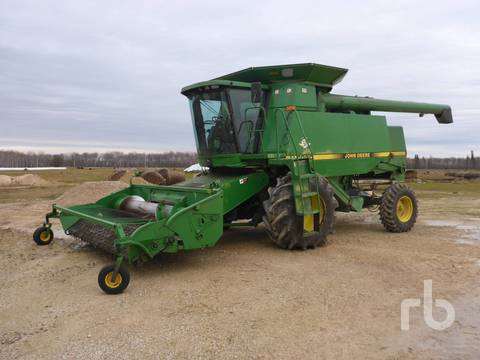
1997 John Deere 9600 combine
A 1999 Rogator 854 102ft high-clearance sprayer sold for $37,000.
Specs: 5,537 hours, 750-gallon stainless steel tank, foam markers, trip nozzle bodies, 5 Sec Control, Raven SmarTrax, Raven receiver, hyd axle adj, 270/95R 48.
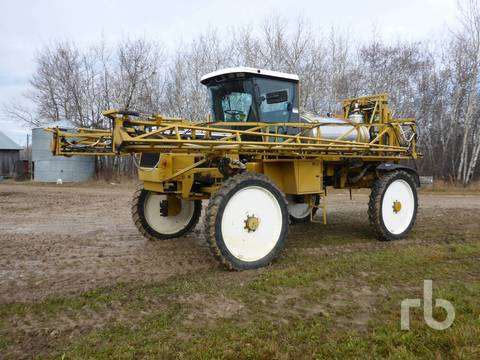
1999 Rogator 854 102ft high-clearance sprayer
A 1992 John Deere 4255 MFWD tractor sold for $32,500.
Specs: 280 ldr, bkt, grapple, powershift, diff lock, 3 hyd outlets, 16.9x26 F, 20.8x38 R.
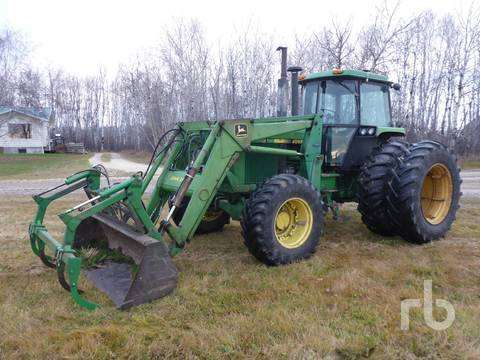
1992 John Deere 4255 MFWD tractor
A 2005 Lode King 28-ft Super B grain trailer sold for $32,000.
Specs: steel sides & alum slopes box, A/R susp, air scales, roll tarp.
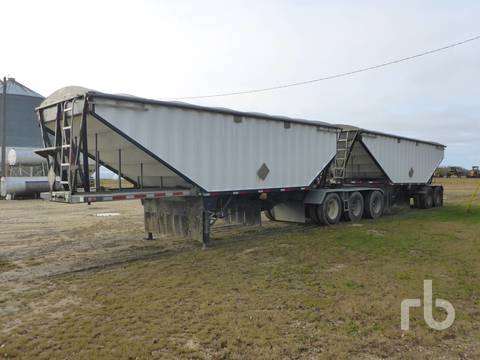
2005 Lode King 28-ft Super B grain trailer
A 1995 John Deere 9600 combine sold for $32,000.
Specs: 4,558 engine hours, 3,294 separator hours, 914 hdr, rock trap, grain tank exts, chopper, 30.5Lx32 F, 14.9x24 R.
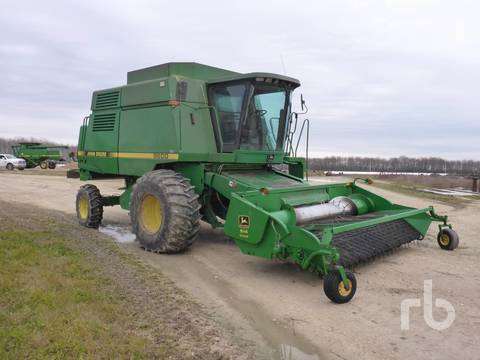
1995 John Deere 9600 combine
A 1990 John Deere 4055 MFWD tractor sold for $27,500.
Specs: 5,703 hours, 730 ldr, joystick, powershift, 2 hyd outlets, 540/1000 PTO, 3 pt hitch, 14.9x28 F, 18.4x38 R.
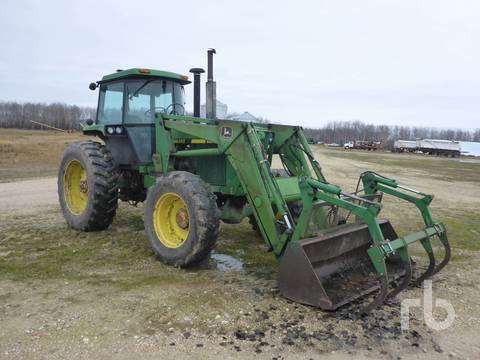
1990 John Deere 4055 MFWD tractor