Structure was empty when the fire broke out
By Diego Flammini
Assistant Editor, North American Content
Farms.com
Only a few days into the new year and firefighters responded to a barn fire in southern Ontario.
More than 40 firefighters from West Perth, Perth East, Sebringville, St. Mary’s and Granton fire departments responded to a barn fire at a pork farm on Perth Line 16 near Highway 23 around noon yesterday.
Bill Hunter, Fire Chief of West Perth and Perth East’s fire departments, said the barn was empty and no livestock perished; when crews arrived, the barn completely engulfed. Hunter said the main goal was to keep the fire from spreading to other buildings.
“The barn was emptied out (in the morning),” Jim Tubb, Station Chief for West Perth Fire told CTV Kitchener. “It was full of pigs and they were all shipped out.”
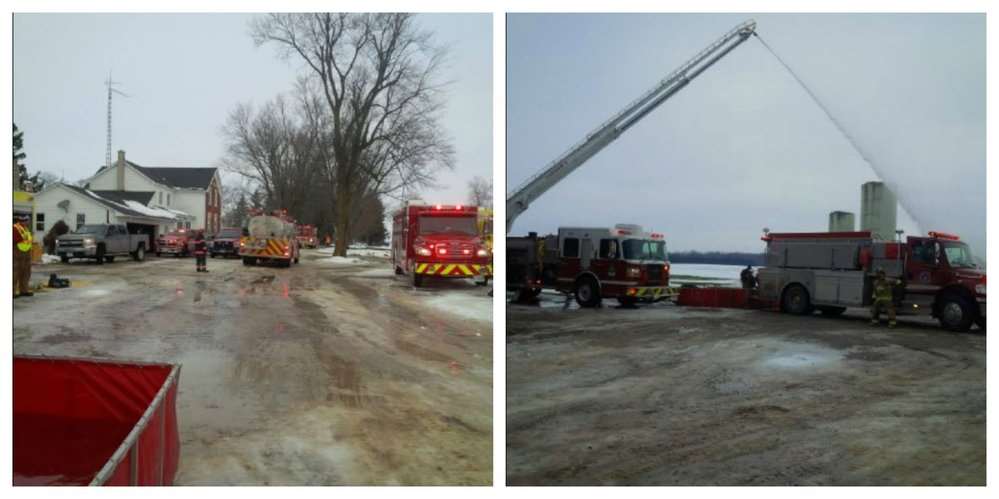
Firefighters battle a fire at a pork barn near Mitchell, Ontario.
Photo: William Hunter/Twitter
An excavator was on site to help sort through debris and tear down some of the barn.
The cause of the fire and whether the Ontario Fire Marshal has been called in are still unknown.
Farms.com has reached out to Chief Hunter for updates on the situation.
Barn fires were an unfortunate theme in Ontario throughout 2016.
Farms.com covered more than 20 incidents. As a result it's the number one Ontario-based story on Farms.com during 2016.
OMAFRA’s publication, Reducing the Risk of Fire on Farm, provides prevention strategies and maintenance tips to help reduce the possibility of fires in barns.