Voluntary U.S. origin labels reshape hog exports prices and trade strategy
Canadian hog production is closely tied to exports of live animals to the United States. Each year, millions of hogs and feeder pigs are shipped south for finishing and processing. Because of this strong connection, changes in U.S. meat labeling laws can directly affect Canada’s hog sector.
FCC Economics reminds everyone that in 2025, the United States introduced a new voluntary country of origin labeling rule. Under this rule, pork products can only carry the label “Product of USA” if the animal was born, raised, and processed entirely in the United States. Companies are not required to use this label, but those that do must follow the new standards. This approach replaces the earlier mandatory labeling system that existed between 2009 and 2015.
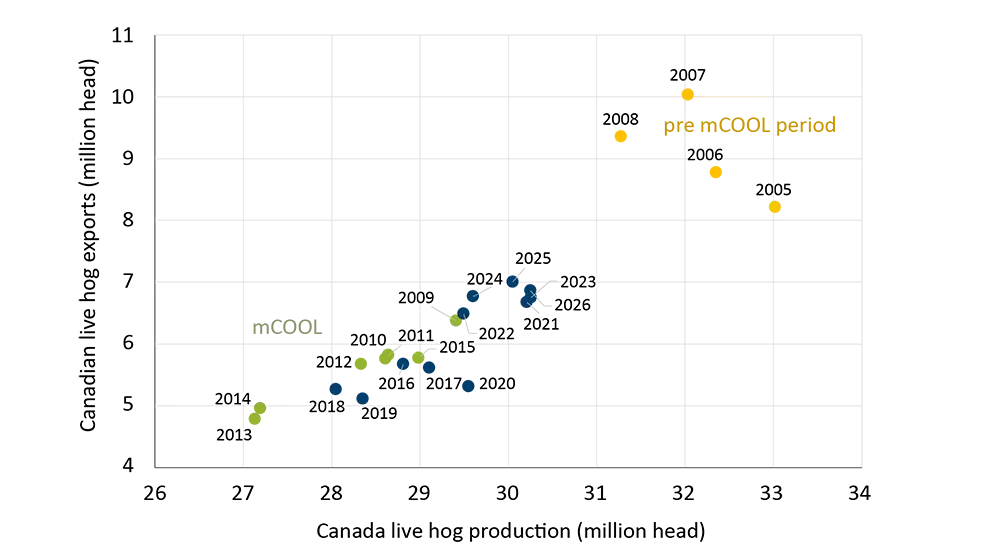
Figure 1. Could vCOOL trigger a drop in Canadian hog exports to the U.S.?
Sources: CGC, AAFC, FCC Economics
The earlier mandatory system caused major trade disruptions. Canada and Mexico successfully challenged those rules at the World Trade Organization. During that period, Canadian hog exports to the United States dropped sharply, with exports falling by more than half in one year. Many buyers avoided Canadian animals because of added costs and complexity.
The current voluntary system is expected to have a smaller impact than the previous mandatory rules according to FCC Economics. However, some effects are still possible. If U.S. consumers show a strong preference for pork labeled as a U.S. product, American processors may favor domestic hogs. This shift could reduce demand for Canadian hogs and place pressure on prices received by Canadian producers.
FCC Economics says there are also positive developments for Canada. Domestic slaughter and processing capacity has expanded in recent years. As a result, fewer live hogs are expected to be exported, with more animals processed within Canada. This change helps reduce reliance on the U.S. market and keeps more value inside the country.
Diversifying export markets remains a key strategy. Strong demand across the Asia Pacific region, especially in Japan, is expected to support Canadian pork exports. A favorable exchange rate also improves competitiveness in global markets.
With these factors combined, FCC Economics says Canada’s hog sector is better positioned to manage changing trade rules while maintaining stable production and export growth.
Photo Credit: pexels-mali