Brian Pearson’s farm focuses on hops
By Diego Flammini
Assistant Editor, North American Content
Farms.com
Twenty-five years seemed long enough for Brian Pearson to work on Toronto’s Bay Street in the financial sector, so he traded in his dress shoes for work boots.
“At the age of 50, I looked at life and realized that life is too short, so what’s the next thing for me to do?” he told CBC.
Evidently, the next thing was to become a farmer.
He bought a parcel of land in Oro-Medonte, Ontario. After doing extensive research, the craft beer enthusiast decided hops, a crop that can take up to three years to fully mature, would be his crop of choice.
Pearson, who now operates six-acre Cahiague (pronounced Ka-Hog-Way) Farms, said he took a chance on hops. He planted some last year and had success with it.
Getty
With the growing popularity of craft beers, there’s been an increase in the number of hops acres across the country. OMAFRA said there’s about 339 hops acres, compared to 255 acres in 2014.
Despite his early success, Pearson, like most farmers, realize agriculture is a pricey industry to be a part of.
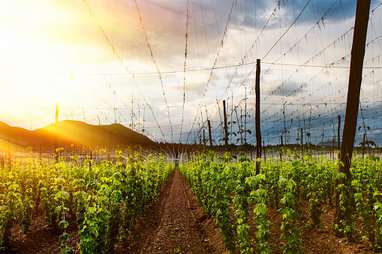
“Anything to do with farming is expensive,” he told CBC. “These trellis systems are 18 feet (5.5 metres) in the air, there’s the cost of labour to install that, there’s the cost of picking equipment (and) you need an oast house to dry out the hops.”
Pearson said he’s invested a large amount of money into his operation. Hesaid if the finances didn’t add up, he wouldn’t be growing hops.