This data collection can help close rural data gaps in policy development, Leith Deacon says
New surveys for rural Ontarians are helping people in these communities paint a comprehensive picture of what life is like.
“For too long, rural communities have lacked access to reliable, credible and reflective data,” Leith Deacon, a professor at University of Guelph’s School of Environmental Design and Rural Development, told Farms.com. “They’re being asked to make policy decisions or planning decisions or funding applications using data that is not their own, that’s old, or is fragmented.”
A reason for this, Deacon says, is that Canada’s population is mostly urban.
The 2021 Census, for example, counted 6.6 million rural residents, or about 18 per cent of the total population.
For context, Ontario’s rural population in that census – about 2.5 million people – represented about 17 per cent of the province’s population.
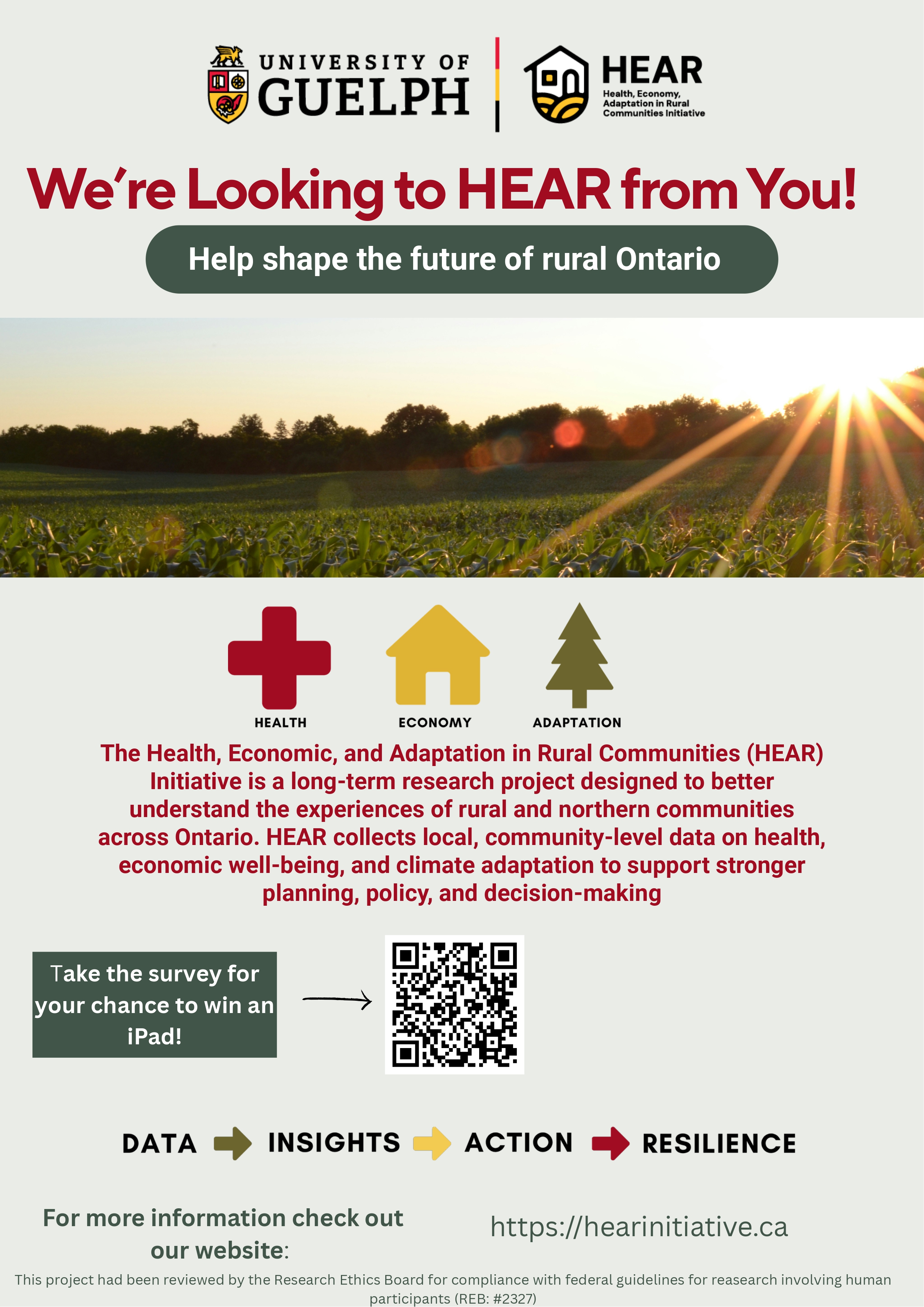
To address these data gap challenges, the University of Guelph, with support from the McCall MacBain Foundation, launched the HEAR (Health, Economic and Adaptation in Rural Communities) Initiative to conduct this data collection exercise in rural Ontario in 2026, 2028, and 2030.
Deacon is HEAR’s inaugural chair.
Two surveys are available to rural Ontarians.
One is a paper copy that will be distributed to about 20 per cent of rural households.
“That’ll go out at the end of the month, and about 221,000 houses in Ontario will receive it,” Deacon said. “All houses are rural areas as designated Canada Post. This means the second digit in the postal code is a zero.”
Topics in the survey reflect HEAR’s target areas.
Health: mental health and addictions, and access to a family doctor.
Economics: housing costs, spending habits, and concerns about economic stability.
Adaptation: exposure to wildfire smoke, and climate adaptation.
“You can count the number of physicians and emergency room beds, and that’s really important,” Deacon said. “However, to fully understand the picture you need to gather individual, experience-based information.”
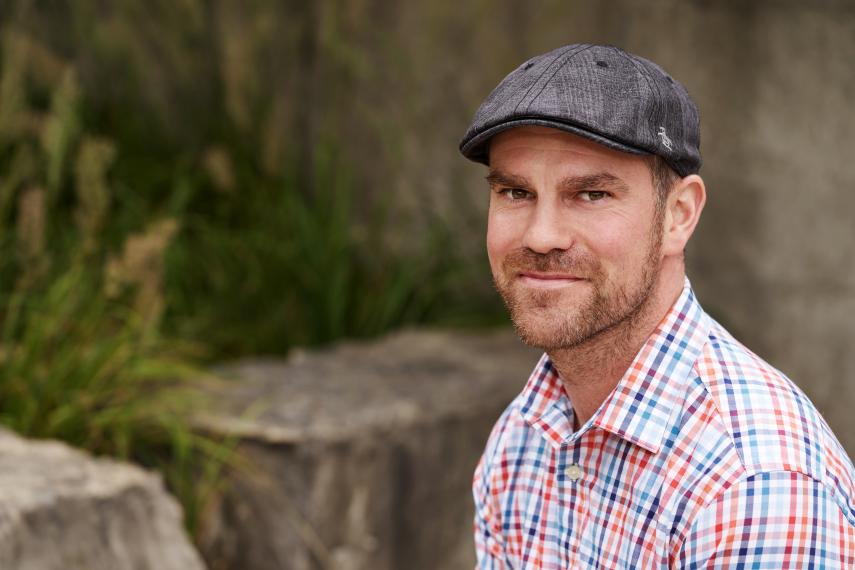
Leith Deacon (University of Guelph photo)
The survey does ask for respondents to provide contact information but that isn’t a required field. In addition people can skip over questions they don’t want to answer.
Parts of the survey are also tailored to specific regions.
Deacon’s team created five versions of the questionnaire to reflect the differences in rural Ontario communities.
“The five versions are reflective of five (of the six) health areas as designated by the province. We just removed the GTA,” he said. “Resource extraction and agriculture matter differently in different places. We felt it important to ask targeted questions to the people we want to participate.”
The second available is available online for individuals, which about 200 people have already taken.
Collecting responses from individuals and households provides Deacon and his team with a deeper dataset.
Especially on topics of mental health and addictions.
“All too often in a household we’re not being completely honest with the people in it,” he said. “Young adults may hold things back from their parents. And everybody can get the digital version, so just because your community wasn’t picked for the paper survey doesn’t mean you can’t participate.”
It was a survey Deacon conducted about mental health almost five years ago that sparked the idea for the HEAR Initiative.
The smaller study in 2021/2022 collected about 27,000 responses from rural Ontarians about mental health during the COVID-19 pandemic.
Presentations about his findings showed a hunger for access to detailed information.
“I’d have people asking me if I could provide the data to them, but because of the ethics requirements for that particular project, I could not,” he said. “But it demonstrated to me that there’s an interest in data in rural communities that is granular, and not just aggregate-based.”
The windows to participate in the surveys are open indefinitely.
Once the information is collected and organized, it will be available to decisionmakers to help them understand how their work affects people outside of urban areas.
“When you’re getting into policy design and delivery, it’s important for governments to understand rural communities are not just small urban centres,” Deacon said. “They are completely different, have unique needs and often competing needs.”
A municipality with a data request, for example, would contact Deacon about the data it needs, and Deacon and his team would provide in a way the municipality can make the best use of it.
While HEAR is starting with rural Ontario, Deacon says a future goal would be conduct this kind of survey across Canada.