Expect temperatures to be warmer than normal
There are 36 days until March 20, the official first day of spring, and The Old Farmer’s Almanac released its forecast for Spring 2025.
“The U.S. spring outlook predicts warmer-than-normal temperatures for most of the country, with a few exceptions,” the forecast says.
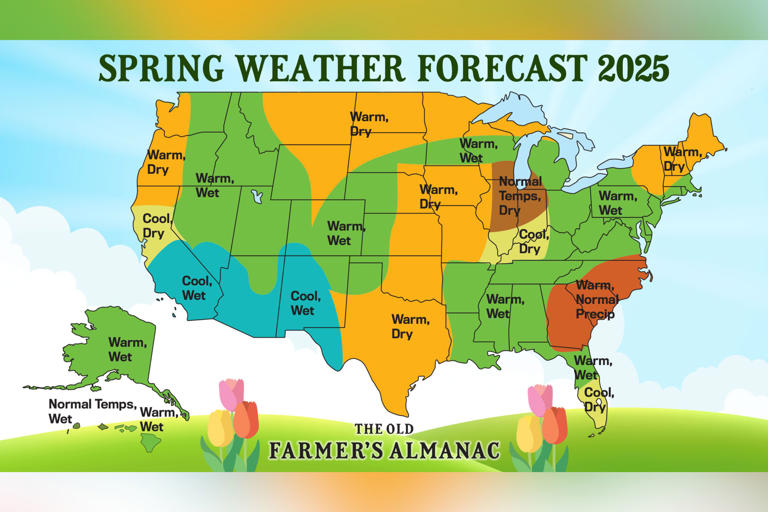
Those exceptions are for places like New Mexico, Arizona, parts of California, and the western Ohio Valley. The almanac predicts cooler temperatures in April and May, and above normal levels of rainfall.
Here’s what the publication predicts for other areas of the country.
Farmers in the Upper Midwest, in the upper half of Wisconsin and Minnesota, can expect temperatures to be about three degrees above the average, with lower precipitation in the north, and wetter conditions in the south.
Growers in the Heartland, which includes Iowa, Missouri, and eastern Kansas and Nebraska, farmers could also see temperatures about three degrees above normal conditions.
“However, rainfall will be below normal across the region, with waves of heat and dry conditions likely to continue through the summer,” the almanac’s forecast says.
And producers across Michigan and the Great Lakes states can expect warmer temperatures, higher volumes of rainfall in the east, and lower amounts of precipitation in the west.