Canadian farmers/producers continue to demonstrate their commitment to ensuring empty ag-product containers used for pesticides and fertilizers are returned for recycling.
Cleanfarms, the national stewardship organization that develops and operates programs to help producers manage on-farm agricultural waste materials just released the recovery rates for 2021 for ag packaging of various types that is collected for recycling or safe disposal.
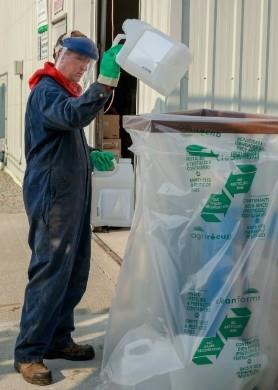
The flagship program recovers empty plastic jugs 23L and smaller that deliver ag pesticides and fertilizers to producers. In 2021, farmers returned more than three quarters of the containers sold into the marketplace…more than 2.25 million kilograms, edging up the three-year rolling average recovery rate to 77%.
The recycling recovery rate has soared since 2011 when it was 69%. In 2019, it was 71% and in 2020, it was 76%, indicating that producers continue to look for ways they can manage on-farm waste materials in an environmentally appropriate manner.
The recovery rate measures the percentage of containers collected for recycling compared to the number of containers sold into the market in that year. The three-year rolling average recovery rate evens out the rate over three years taking into consideration factors that could cause variations such as differing needs due to weather.
“Empty plastic jugs aren’t the only ag containers producers are recycling,” said Cleanfarms Executive Director Barry Friesen. “They are bringing back several essential items used on farms for recycling – like empty non-deposit bulk drums and totes, too. This recycling program for bulk containers is newer, only a few years old. By returning them for recycling, farmers are ensuring the plastic in both smaller and larger containers is used to make new products in a circular economy. We are grateful that producers are responding to the programs in such a positive way.”
In 2021, farmers returned 54% of the bulk containers sold in the marketplace, or more than 71,000 drums and totes. That’s an increase from 50% in 2019 and 52% in 2020.
Cleanfarms also operates a grain bag recycling program in Saskatchewan established under the province’s The Agricultural Packaging Product Waste Stewardship Regulations (2016). When it got underway in 2018, it was the only government-regulated extended producer responsibility program of its kind in Canada. Since then, Manitoba has established industry responsibility (called extended producer responsibility) on grain bags and twine and PEI has done so on a variety of ag plastics. In June 2022, the Québec government published a new regulation which targets all agricultural plastics. Cleanfarms is operating pilots in Alberta to collect information on grain bag recycling recovery patterns.
Collecting used grain bags in Saskatchewan is growing year over year. In 2018, Cleanfarms recovered 1,257 tonnes of grain bag plastic. In 2021, the rolling three-year average recycling recovery rate was 64%, representing more than 2,100 tonnes of used plastic grain bags.
In eastern Canada, farmers also return seed and pesticide bags for safe disposal, as recycling markets are not available yet. Producers in Quebec also return fertilizer bags. In 2017, when the recovery program got underway in earnest, the three-year recovery rate was 22%. In 2021, it topped 38%. Pilots are underway in the prairies to add seed, pesticide and inoculant bag recovery there, too.
“Cleanfarms’ recycling programs are like the ‘blue box’ or ‘blue bag’ for growers. We are working every day to find better ways to deliver these programs conveniently and efficiently to producers so that more of these materials can be returned to be repurposed in the circular economy,” Friesen said.
Materials recovered through Cleanfarms’ programs are processed by small and large companies within North America to form recycled plastic pellets and flake that are recycled into new products such as farm drainage tile, dimensional lumber, lawn edging and agricultural film plastics.
Cleanfarms is a national agricultural industry stewardship organization that contributes to a healthier environment and a sustainable future by recovering and recycling agricultural and related industry plastics, packaging and products. It collects materials for recycling and safe disposal through a network of some 1,500 ag retail and municipal partners. It is funded by its members in the crop protection, fertilizer, seed, animal health medication, and ag plastics industries. It has staff located in Lethbridge, Alberta; Moose Jaw, Saskatchewan; Winnipeg, Manitoba; Etobicoke, Ontario; and St-Bruno, Quebec.
Source : cleanfarms