By Dr. Kenny Burdine
As I write this article for Cattle Market Notes Weekly on August 25th, the cattle market is absorbing a US case of New World Screwworm (NWS). It appears that a human case of NWS was confirmed earlier this month in Maryland and was the result of someone traveling to Central America. At this point, there has not been a confirmed animal case, but cattle markets have responded to the news. The CME© October live cattle futures contract ended the day down $0.90 per cwt from Friday. Fall CME© feeder cattle futures prices were down by less than $1.50 per cwt. Both tested lower levels earlier in the day but settled at much smaller decreases by the afternoon.
I think the main reason why the market response was limited is that there really isn’t a fundamental market implication of this announcement based on current information. Since this was a human case, and NWS has not yet been found in livestock, there is no expected supply impact. A demand response also seems unlikely, although both of those things could change if more is learned in the coming days. The announcement does serve as a clear reminder that NWS is a threat to the livestock sector and animal health officials will continue to monitor the herd and release sterile male flies in Mexico.
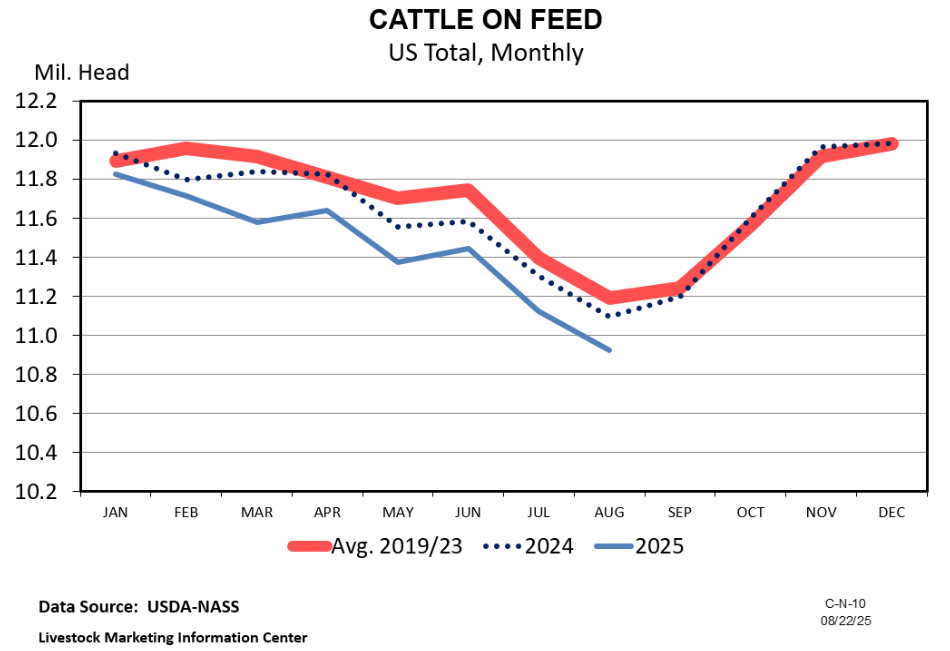
At the same time the cattle markets were processing NWS, they were also processing a Cattle-on-Feed report that was slightly bearish. The August Cattle-on-Feed report was released on Friday August 22nd. Total on-feed inventory for August 1 was estimated to be 11.1 million head, which was a little larger than the average of pre-report estimates. Marketings came in at 94.3% of last year, which was just a tick higher than expected.
Source : osu.edu