By Jim Noel
Summer saw hit and miss rains and warm temperatures so what will the harvest season bring?
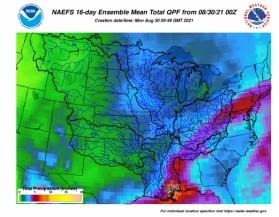
As we close out summer and the growing season we expect some week-to-week swings in the climate pattern for September. This means expect a warm week followed by a cooler week followed by a warmer week. The same applies to rainfall. We expect dry and wet periods. Overall, September appears to favor normal temperatures and slightly wetter conditions especially in southern areas. The driest areas appear to favor northwest Ohio. The attached image is the 16-day mean rainfall outlook calling for rainfall for through middle September to range from well under an inch in northwest Ohio to 3 or 4 inches in the far southeast part of the state.
The ocean patterns are similar to last year but not quite as extreme so we may see an autumn pattern somewhat similar to last year which is a whole lot of typical conditions. With that said, there is no information in our climate signals to indicate anything else but a typical first freeze for this fall.
Looking ahead to October, most indications show a somewhat warmer and possibly drier period followed by about a normal November.
When you put it all together, we anticipate a slightly warmer September to November period with precipitation close to normal.
With the possibility of another weak La Nina this winter it may turn a bit wetter but confidence in that is low to medium at this time.
Finally, for users of the NOAA Midwest Climate Center, please take note of the new website at Purdue University.
Source : osu.edu