By Ryan Hanrahan
Bloomberg’s Anuradha Raghu and Hallie Gu reported that “the extended closure of the Strait of Hormuz and extreme weather have jolted the price index for farm commodities to a two-year high as fertilizer headaches and the prospect of smaller harvests drive food inflation risks.”
“The Bloomberg Agriculture Spot Index, which tracks 10 of the world’s top-selling crop products, has climbed for a third straight month to the highest level since November 2023. That’s a pronounced shift from before the war, when most crop prices were weighed down by abundant inventory and bumper harvests,” Raghu and Gu reported. “Now, farmers from Asia to Australia and the US are grappling with converging challenges posed by the Iran war and drought, pressuring the prices of staple food products from bread to pasta and cooking oil.”
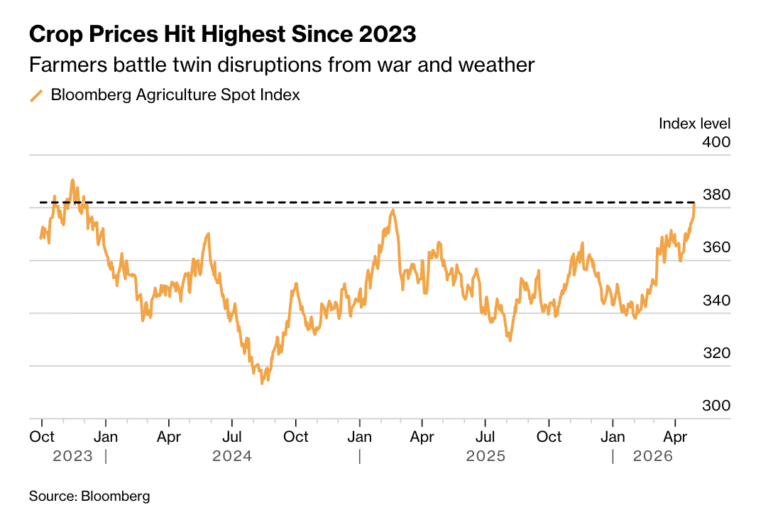
“Wheat and corn, both fertilizer-intensive crops, are among the hardest hit. The most actively traded wheat futures on the Chicago Board of Trade have surged 11% since the war erupted in late February, and hit the highest level in almost two years this week. Corn has climbed 6% in the past two months to the highest in a year,” Raghu and Gu reported. “Some farmers in major producing countries have had to reduce planting to cut costs. Persistent dryness in the US Great Plains is driving up wheat prices, while severe weather outlooks are causing concern in other key regions including Australia and Russia. The spillover effect is impacting corn.”
“‘Weather is now emerging as a second major layer of risk,’ (Kang Wei Cheang, an agricultural broker at StoneX in Singapore) said,” according to Raghu and Gu’s reporting. “Forecasts for an El Niño later this year matters most for crops such as palm oil, soybeans, and corn ‘where heat stress or disrupted rainfall during key growing periods can quickly tighten’ supply balances, he added.”
Source : illinois.edu