By Dr. Dan Undersander
How does wheel traffic cause forage loss?
Wheel traffic causes yield reduction in part to both deep soil compaction and surface soil compaction. Another portion of the yield loss is due to cracking or breaking of crowns, which will reduce the shoots produced and may allow entry of disease into the crown. However, the major damage and cause of yield loss for alfalfa harvested more than two days after cutting is breaking shoots that have begun to regrow.
How much yield is lost from wheel traffic?
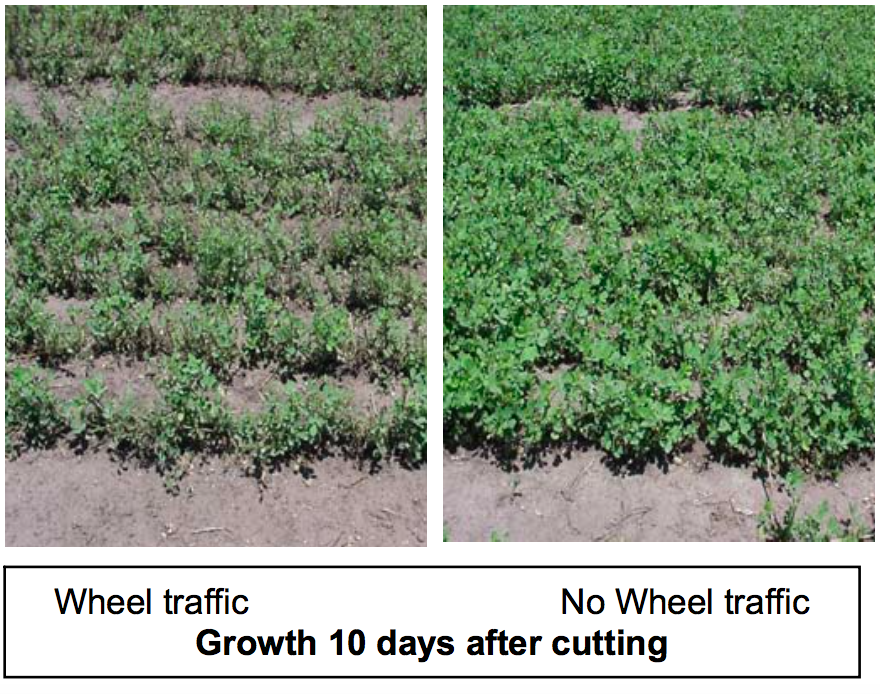
The amount of wheel traffic yield reduction is likely to vary from field to field and cutting to cutting depending on plant and soil conditions. Yield loss to the next cutting is greater as the traffic occurs longer after mowing. The yield loss has generally been 4 to 6% per day after mowing (e.g. traffic 5 days after mowing creates a yield loss of about 22%).
What can be done to reduce losses?
The following management practices can reduce the impact of wheel traffic:
- Plant alfalfa varieties more tolerant of wheel traffic.
- Use small tractors when possible (to reduce soil compaction).
- Drive over the field as soon after cutting as possible
- Raking at 24 hrs causes less damage than raking at 48 hours
- Merge swaths into large windrows so harvesting equipment has less driving on the field
- Making haulage at 1 to 2 days after cutting causes less yield loss than making hay at 3 to 5 days after cutting
- Avoid unnecessary trips across the field when harvesting
- Get full wagons/trucks off the field with as little driving as possible.
- If bales are dropped and collected — can this be done with less driving?
- Do not drive on alfalfa field when harvesting crop of adjacent field.
- Consider using larger harvesting equipment (there is some question about this because while less area is affected by wheel traffic, the affected area has greater weight applied to it). This could be another benefit of contract harvesting.
- Using duals on harvesting machinery is not recommended unless necessary to avoid ruts.
Does wheel traffic affect grasses?
Wheel traffic will cause some soil compaction (and associate yield loss) for grasses but will not break off stems as occurs with alfalfa. So yield loss will be much less for grass than for alfalfa.
Source:uwex.edu