As summer approaches, it's important for cattle producers to make plans to help reduce stress on cattle during hot weather, according to Nebraska Extension educator Rob Eirich, who directs the Nebraska Beef Quality Assurance program.
Cattle producers are urged to take precautions to minimize the heat stress placed on cattle.
Cattle producers can determine the risk in cattle handling by referring to the Temperature Humidity Index, or heat index.
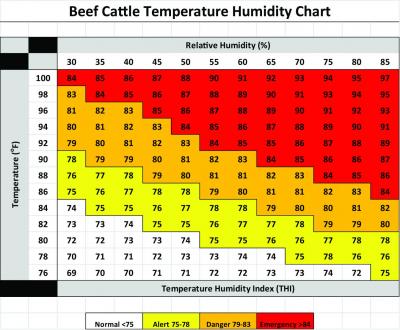
Cattle producers can determine the risk of cattle heat stress handling by referring to the Temperature Humidity Index, or heat index.
"It’s important to understand the relationship between temperature and humidity," Eirich said. "Cattlemen need to be aware of the risk based on weather forecasts of heat stress."
Additional guidelines to consider during summer hot spells:
- Handling cattle early in the morning before temperatures get too high is recommended. Plan to handle cattle before 8 a.m. and never during daylight hours after 10 a.m. The animal's core temperature peaks about two hours after the environmental temperature peaks, and takes four to six hours to return to normal. Handling cattle in the early morning and evening will reduce the risk of heat stress.
- When processing cattle during high-heat seasons, work cattle in smaller groups so they are not standing in holding areas much longer than 30 minutes. Cattle producers should consider facilities that are shaded and have good airflow to help reduce the heat. A sprinkler system may help cool the area if the water droplet size is large. Never overcrowd working facilities. Work cattle slowly and use low-stress handling techniques. Processing cattle in any temperature elevates the animal's core temperature.
- Cattle should be moved only short distances during hot weather. Strategic planning on pen movements can help reduce unnecessary movements and potential heat stress. Moving heavier cattle closer to loading facilities throughout the feeding period can help minimize heat effects.
- When planning or improving cattle handling and feeding facilities, cattle producers should consider airflow, shade and sprinkler systems for cooling livestock.
- Cattle producers can determine the risk of cattle heat stress handling by referring to the Temperature Humidity Index, or heat index.
- Cattle producers are urged to take precautions to minimize the heat stress placed on cattle.
Source : unl.edu