By Amy Raudenbush and Suranga Basnagala et.al
Black cutworm
We are currently in our second week of monitoring for the black cutworm (BCW, Figure 1).
Traps were checked between May 2 – 8 for the presence of BCW adult moths. Over the past week, a total of 28 traps in 9 counties were monitored. Moth numbers in the majority of monitoring counties have increased over the past week (Figure 2). Both Trumbull and Van Wert recorded an average of greater than 10 moths (Figure 2). Counties with high trap numbers should plan to monitor for BCW larvae after corn is planted, especially in fields with a lot of broadleaf weeds such broadleaf weeds, such as chickweed and purple dead nettle. For more information about BCW please visit: https://aginsects.osu.edu/sites/aginsects/files/imce/ENT_35_14%20BCW.pdf
For corn varieties tolerant of BCW, please review the Handy Bt Trait Table: https://aginsects.osu.edu/bt-corn-trait-table
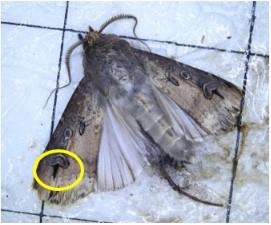
Figure 1. Black cutworm moth (BCW). Distinct black, dagger shaped markings on the forewing (circled in yellow).
Black cutworm moth report - Week 2
May 2 to May 8, 2022
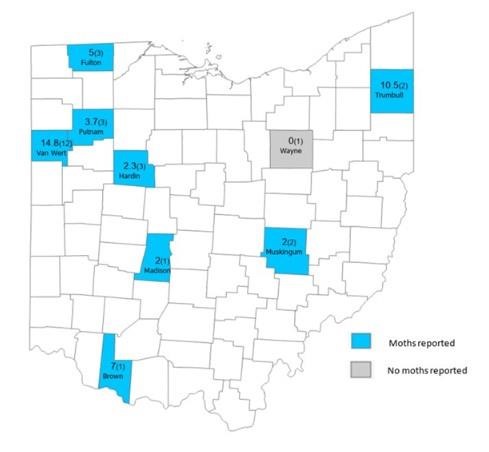
Figure 2. Average black cutworm (BCW) moths captured from May 2nd to May 8th. Large number indicates the average moth count for the week and the small number in parentheses is the total traps set up in the county.
Source : osu.edu