Farms.com Home   News

Lygus No Threat When Pods Get Leathery


Lygus No Threat When Pods Get Leathery

Economic control thresholds for lygus bugs are based on adult and late instar counts. As an example, when canola prices are $12 per bushel and application costs are $12 per acre, the threshold is 11 adults or late instar bugs per 10 sweeps.

Before spraying, consider the pre-harvest interval for the chosen insecticide. Products with the shortest pre-harvest intervals still require 7 days between spraying and cutting, so if the field is within a week of swathing, then spraying is no longer an option. In fields that close to cutting, many pods are hardening and lygus will not be able to penetrate and cause damage anyway.
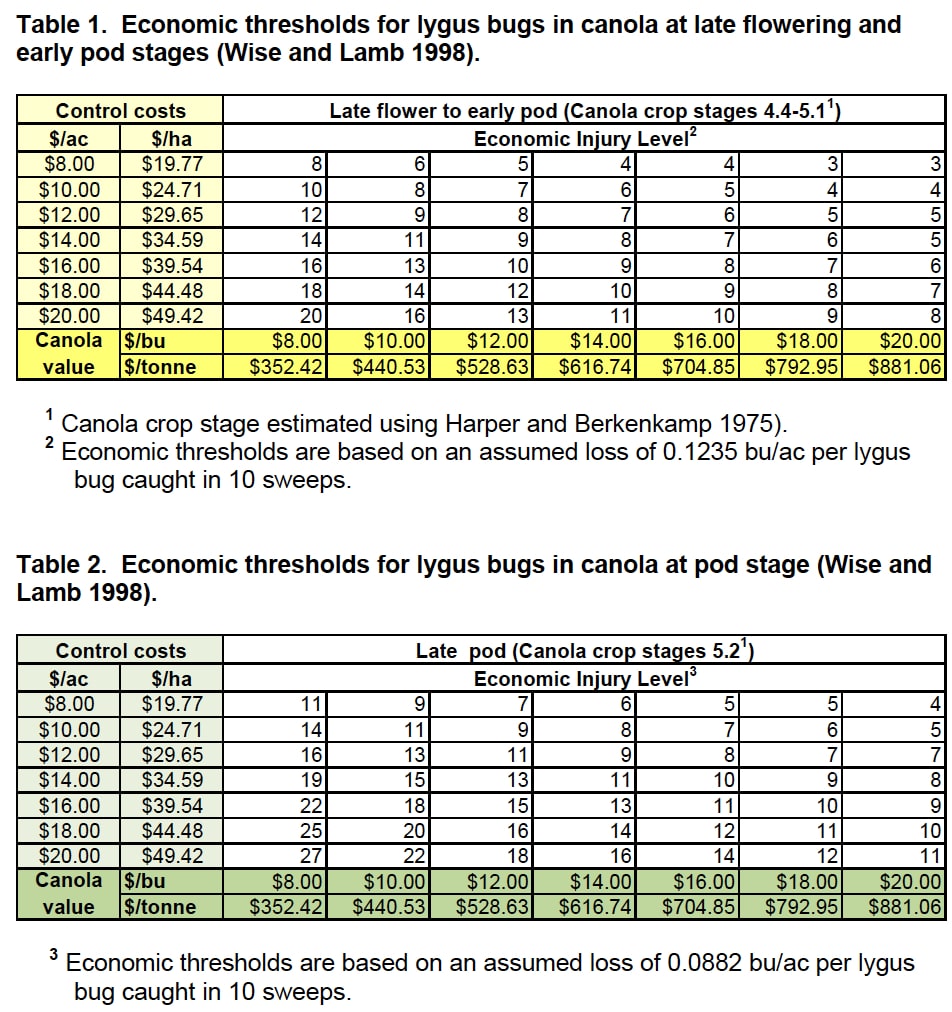

Source: Canola Council of Canada


Trending Video

Sclerotinia and Lygus in Seed Canola: Field Update with George Lubberts, CCA | Enchant, Alberta

Video: Sclerotinia and Lygus in Seed Canola: Field Update with George Lubberts, CCA | Enchant, Alberta

Join Certified Crop Advisor George Lubberts for this Prairie Certified Crop Advisor (Prairie CCA) field update from Enchant, Alberta. In this 12th video of the series, George takes us into a seed canola field where the male rows have been removed and the female plants are filling pods. This video was taken in the third week of August 2025.

George discusses the early signs of sclerotinia stem rot, explaining how infection begins in the stem, impacts pod development, and leads to premature ripening. He also shares insights on lygus bug management, including timing of spray applications to minimize feeding damage and maintain seed size and quality.

With cool, damp summer conditions, George notes that while disease pressure is present, overall field health remains good. The crop is just beginning to show early seed colour change, signaling progress toward maturity.

Topics Covered:

•Sclerotinia stem rot identification and impact

•Managing lygus bugs in seed canola

•Crop stage and seed colour change observations

•Timing insecticide sprays for optimal protection

•Insights from a CCA field perspective in southern Alberta