By Ryan Hanrahan
AgWeb’s Tyne Morgan reported that “the U.S. ag economy enters 2026 in a clear crop-sector recession, but the deeper crisis is one of confidence. High input costs, weak prices, policy uncertainty and eroding trust in data have pushed many producers from planning for profitability into fighting for survival. Economists largely view the downturn as cyclical and manageable through optimization, while farmers experience it as a structural stress test on their operations and livelihoods.”
In the first Farm Journal Ag Economists’ Monthly Monitor of 2026, economists “pointed to a familiar but intensifying split in the ag economy: strength in livestock, particularly beef cattle, versus persistent financial stress across much of the row-crop sector,” Morgan reported. “Tight cattle supplies and strong global demand for animal protein continue to support profitability in the livestock sector, even as economists warn that future prospects remain uncertain. At the same time, global surpluses of corn, soybeans and wheat, combined with weak export demand for certain commodities, are weighing heavily on crop prices.”
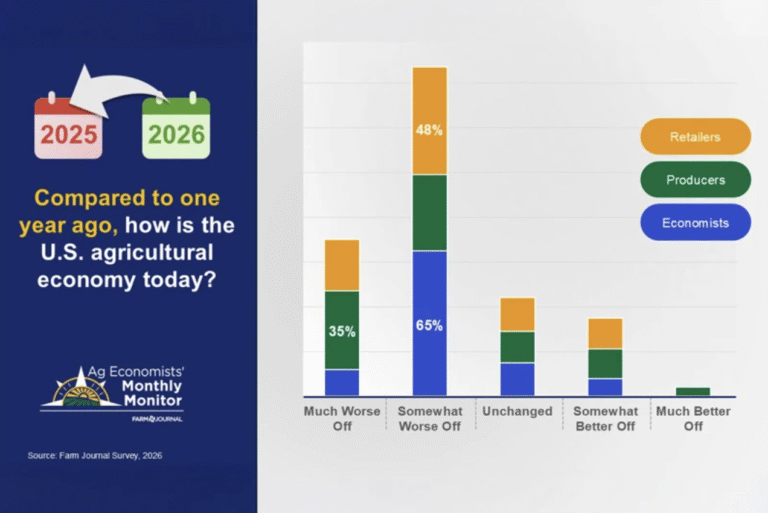
“Across nearly all responses, margin pressure emerged as a dominant concern,” Morgan reported. “Elevated input costs, rising interest rates and tightening access to operating loans are pushing break-even costs above market prices for many producers, especially in grain production.”
“When asked a simple but heavy question: ‘What can you do to be successful in 2026,’ farmers didn’t sugarcoat the challenge. Their answers reflect pressure, fatigue and uncertainty. But underneath the blunt language is a clear, consistent strategy emerging across operations: protect cash, defend ROI and stay flexible long enough to outlast the cycle,” Morgan reported. “While several producers said they’re looking to diversify as a key to success, the most dominant theme was cutting costs to the bone, especially when it comes to capital spending. Farmers repeatedly emphasized zero, or near-zero, capex, delaying equipment upgrades and scrutinizing every purchase.”
Source : illinois.edu