Merck Animal Health, known as MSD Animal Health outside of the United States and Canada, a division of Merck & Co., Inc., Rahway, N.J., USA (NYSE:MRK), today announced that CIRCUMVENT® CML vaccine is commercially available as part of its swine product portfolio. The company received license approval for the vaccine in the U.S. from the Department of Agriculture (USDA) in 2022.
CIRCUMVENT CML is the first ready-to-use, single-dose vaccine effective against disease caused by Porcine Circovirus Types 2a and 2d, Mycoplasma hyopneumoniae and Lawsonia intracellularis in pigs, three weeks of age or older. With CIRCUMVENT CML, veterinarians and producers have the convenience of vaccinating for three of the most important swine disease concerns, all in one bottle with no mixing or reconstituting.
“This vaccine complements the existing CIRCUMVENT PCV G2, PCV-M G2 and PORCILIS Ileitis product portfolio, providing swine veterinarians and producers with the additional option of vaccinating against disease caused by PCV2, Mycoplasma hyopneumoniae and Lawsonia intracellularis all in one bottle,” said Jamie Lehman, D.V.M., swine technical services veterinarian, Merck Animal Health. “Merck Animal Health continues to shape the future of animal health and well-being through the approval of CIRCUMVENT CML vaccine, which is our latest example of pioneering science that will help the industry improve both animal health and labor efficiency.”
CIRCUMVENT CML is available in 100- and 500-ml vials. To learn more about our portfolio of swine health products and vaccines, visit www.DrivenByPrevention.com.
CIRCUMVENT CML PRODUCT LABEL https://cvpln.com/mrk/nzsdj4X4
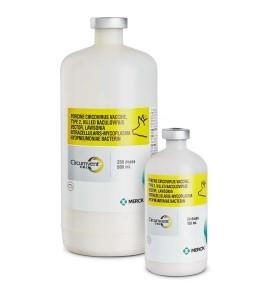
Source : Merck