By Lauren Jescovitch
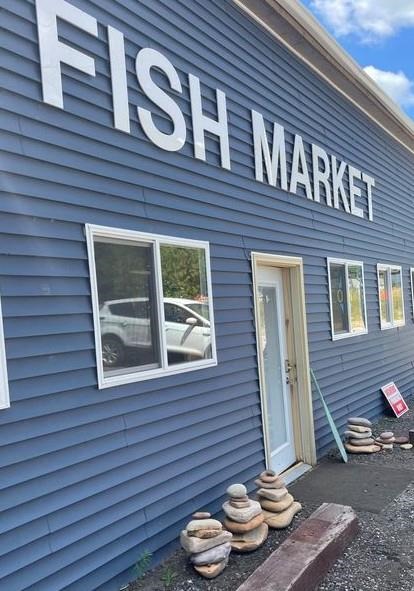
The Great Lakes Fresh Fish Finder at freshfishfinder.org will help you locate retail shops such as Vandlandschoot’s and Sons Fishery in Munising, Mich. Photo: Lauren Jescovitch, Michigan Sea Grant.
The COVID-19 pandemic has created challenges for many industries in the last few years including Michigan seafood producers. The Michigan Department of Agriculture and Rural Development (MDARD) recently opened a new grant opportunity for seafood processors who are currently MDARD-licensed seafood processing facilities in response to the ongoing impacts from COVID-19.
The opportunity is funded through the U.S. Department of Agriculture’s Agricultural Marketing Service, the Seafood Processors Pandemic Response and Safety Block Grant program and it provides relief and assistance to eligible seafood processing facilities and processing vessels The grants will provide cost reimbursement for eligible expenditures that occurred between Jan. 27, 2020, and December 31, 2021.
Grant funding can be used to cover the activities associated with workplace safety measures, market pivots, retrofitting facilities, transportation, worker housing, and medical costs. The grant opened on June 27, 2022, and will remain open until December 31, 2022 as long as funds are available. Funds are administered on a first come, first serve basis. The full application package is available through MDARD’s website.
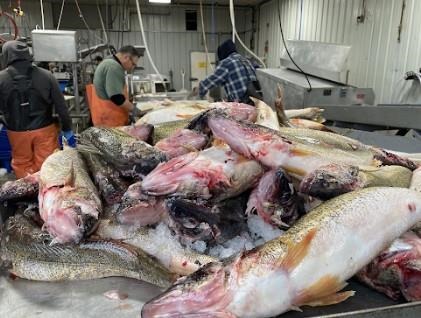 Workers process fish at Massey’s Fish Company in St. Ignace. Photo: Lauren Jescovitch, Michigan Sea Grant
MDARD had a total of 288 seafood processing licenses issued to 248 individual businesses at the end of 2020, according to Michigan Sea Grant’s 2020 Status of the Industry. As of June 2022, MDARD had a reduction in the number of licenses to a total of 281 licenses issued to 233 businesses. It’s important to note that one business can have multiple licenses for example: 1) cutting/eviscerating, 2) preserving/smoking, and 3) egg handling/caviar. Of the 233 businesses active this past June, 182 of these businesses are not chain stores and include a number of today’s Great Lakes commercial fisheries. These businesses also include tribal commercial fisheries if they process and are located off reservation lands.
Source : msu.edu