By Theodore Ball
Nebraska livestock producers have until July 15 to file an annual acreage report with the U.S. Department of Agriculture's Farm Service Agency — a step that can help maintain eligibility for federal drought assistance programs.
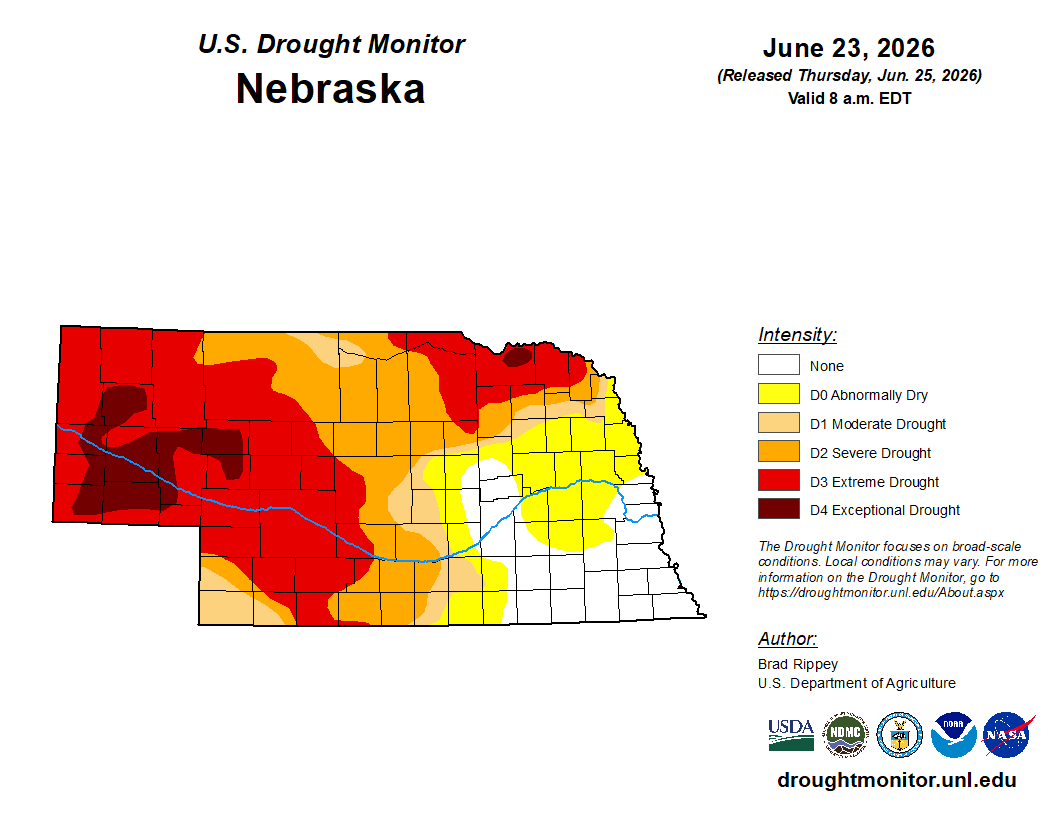
The deadline comes as about three-quarters of Nebraska remains in drought, according to the U.S. Drought Monitor. Nebraska has also been hit by historic wildfires that have burned more than 1 million acres across western and central Nebraska so far this year, including the South Fork Fire in northwest Nebraska, which burned nearly 40,000 acres before being fully contained last week.
The Livestock Forage Disaster Program, known as LFP, is the Farm Service Agency's flagship drought assistance program. It compensates livestock producers for grazing losses caused by drought on privately owned or leased land. Applications for 2026 losses are due March 1, 2027.
Nebraska Farm Service Agency State Executive Director Hilary Maricle said producers who miss the July 15 deadline can still file a late acreage report before completing their LFP application.
"If you want to apply for LFP benefits, we do have a provision to allow for late file," Maricle said. "It just has to occur prior to completing that application."
Still, Maricle encouraged producers not to wait, saying filing by July 15 makes the process smoother when a disaster program triggers.
FSA county-level data shows dozens of Nebraska counties have reached Tier 4 or Tier 5 — the most severe drought classifications — for native and improved pasture, concentrated in the Panhandle, Sandhills and southwest Nebraska. Nearly every county in the state has triggered LFP eligibility for small grains.
Click here to see more...