In most middle-school history classes, students learn all about Eli Whitney and the creation of the cotton gin. As important as this invention was, this is generally where education on the cotton industry ends. However, Alabama 4-H in Limestone County went a step beyond to educate students on this important resource. In late October and early November, Limestone County 4-H and their partners hosted a field trip for fifth- and sixth-grade students to the area’s cotton gin for a day of fun and education.
Opening in 2018, the Associated Growers Cooperative owns and operates the Limestone County cotton gin. It is one of the most technologically-advanced cotton gins in the country. In addition to daily production, the cooperative uses the $7 million facility as a tool to educate the community.
Chris Becker, Alabama Extension’s Limestone County coordinator, said the idea for the field trip came from past student interactions.
“We have had conversations with students in the past about where their clothing comes from,” Becker said. “It never fails that one of their first responses is their clothing comes from a store. While this is indeed the case, it was apparent that the average student in our community did not know what materials their clothing is made from and how this material is created.”
Fun and Education
Becker said it is important that students learn early on what it takes to transform simple, raw materials into the many products that people use on a daily basis.
“Our goal was to educate students about how cotton is produced utilizing the latest technology, hard work and a little help from Mother Nature,” Becker said. “Thanks to everyone involved, the students were truly able to learn about the cotton industry, all the way from seed to shirt.”
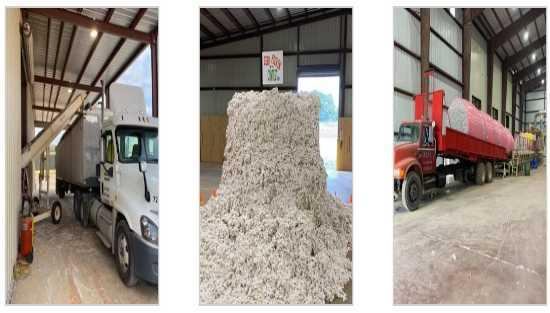
Through several activities, students from Athens City and Limestone County schools were able to see the ginning process in action. Some of the activities the students were able to participate in included
- an opportunity to hand pick cotton
- guessing the weight of a bale of cotton
- a contest to see how many seeds they could remove from a pile of cotton
“Something that I enjoyed about the cotton gin field trip was the activities that we got to do,” said A.J., a student at Creekside Elementary School. “One of my favorites was the seed station and seeing all of the seeds in the big warehouse. Something else I liked was all the loud machinery. It was pretty cool to see how it all worked.”
While fun, these activities also served a larger purpose. Some examples of this were the seed-removal contest and the cotton-picking station. They helped show how technology has changed over the years, making the process much faster.
“It was a great experience to partner with the Associated Growers Cooperative, the Alabama Farmers Federation, students from the Limestone County Career Tech Center Advanced Agriculture Program and local farmers to help provide students with an opportunity to learn about the fiber that is used in so many products,” Becker said.
Source : aces.edu