By Bob Yirka
A team of authors from Uganda and the U.K. with backgrounds in botany, agriculture and the coffee industry has published an article in the journal Nature Plants, pointing out that that the world's coffee growers may soon have to find new ways to grow the popular bean plant due to climate change. In their paper, the group outlines three possible choices facing coffee growers and their preferred option.
Farmers are among those likely to be affected by climate change. In this new effort, the researchers looked at the impact climate change is already having on coffee bean production. They note that in some places where coffee bean plants grow, temperatures are changing and rainfall is becoming less stable. And that, they further note, puts production of coffee beans at risk.
The researchers found that coffee growers are almost certainly going to have to make adjustments to the way they grow their beans. They suggest that there are three main options: They can move to more suitable areas, change how they tend their plants or switch to different coffee bean plant varieties. The researchers suggest the third option is the most viable.
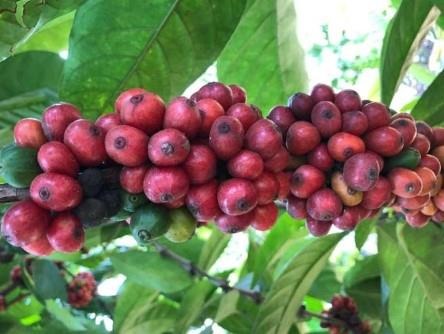
Fruiting branch of excelsa coffee
Currently, most of the world drinks coffee made from either arabica or robusta coffee beans. And over the past several years, yields have decreased for both as droughts have limited production in many areas. To keep the coffee flowing, the researchers suggest coffee growers consider switching to Liberica coffee bean plants.
Click here to see more...