It is planting season for U.S. winter wheat growers. Conditions and timing vary by region, but a lot of the 2023 hard red winter (HRW), soft red winter (SRW) and even fall-seeded soft white (SW) area has already been seeded.
Long before farmers select and clean seed from their last crop or purchase certified seed wheat, researchers and breeders have developed new wheat varieties that meet the highest standards of yield and quality across a wide range of end uses at home and across the world.
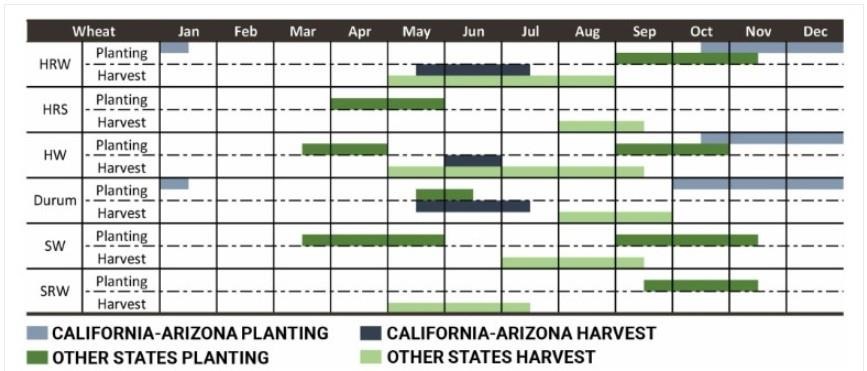
U.S. Winter Wheat Planting starts in September and can last into early November depending on conditions. Winter wheat must experience a period of significant cold days to signal reproductive growth, a process called vernalization.
In a greenhouse at the Kansas Wheat Innovation Center in Manhattan, Kansas State University wheat breeder Dr. Allen Fritz talked about starting the process of creating wheat varieties.
Looking Back to the Future
“There are facilities like this around the country where people are working to improve varieties for those different regions,” he said. “They are working on specific market classes have different functionalities to be able to make almost any kind of wheat food product.”
Dr. Fritz added that to do that work, breeders are finding new ways to use historic wheat genetics to improve wheat quality and production.
“In some projects, we are reaching back into wild relatives and bringing some of those characteristics to bring healthy, nutritious food to the table and I think [breeders] have a passion to bring that forward.”
Naturally Stronger Gluten
At Oklahoma State University, Wheat Genetics Chair Brett Carver and his colleagues are developing new hard red winter wheat varieties that have better gluten strength to produce higher quality bread products while keeping yields and disease resistance high. With naturally developed dough strength, such new varieties may not need additional gluten, adding value to the U.S. wheat and flour produced from it.
“Simply stated, a truly unique combination of wheat quality in a high-performance wheat variety provides value-capturing opportunities to farmers, millers and bakers,” Dr. Carver recently told the High Plains Journal. “It is important that the genetics are maintained and delivered throughout the supply chain in its purest form. Then consumers will see value through a cleaner label on various wheat food products.”
Click here to see more...