By Nicolle Ritchie and Angie Gradiz
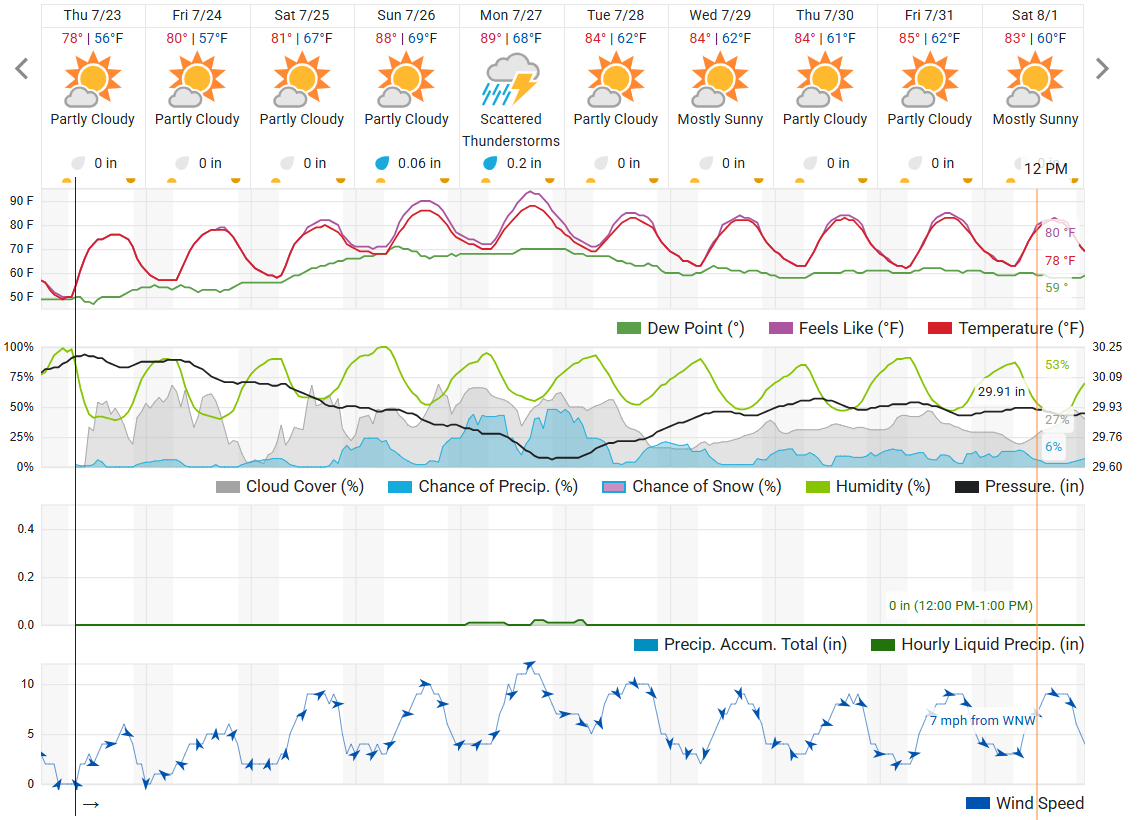
Smoke from wildfires in Canada blanketed Michigan late last week, reducing solar radiation in the southwest part of the state by about 25%. Rain leading into the weekend helped clear some of the smoke away and brought cooler temperatures that have felt a little like fall. The forecast shows that temperatures will increase slightly this week, although nights will remain fairly cool. Scattered showers early next week are not expected to provide significant precipitation, and the rest of the week will be dry and partly cloudy.
Crops and pests
Most soybeans are in early pod stages, with some early beans starting into seed development. Fungicide applications to prevent white mold should be applied between R1 and R3. The Crop Protection Network’s Crop Risk Tool showed high risk of white mold development on irrigated soybeans and low on non-irrigated soybeans in southwest Michigan for the past week.
Corn stages vary throughout the region from late vegetative stages to full pollination. Seed corn detasseling continued. As corn enters reproductive stages, scout for tar spot by looking for small dark lesions on leaves. Make sure to add water and try to rub the lesion off. If it can be rubbed off, it is not tar spot, but insect droppings. Tar spot fungicides are most profitable when applied between R1 (silking) and R3 (milky kernel) in corn. Beyond last week’s confirmations of tar spot in Calhoun and Jackson Counties, no Southwest Michigan counties have confirmed tar spot this week, according to the Tar Spot Map. The Crop Risk Tool showed low risk for tar spot development over the past week. Cooler temperatures and irrigation increase tar spot risk.
Source : msu.edu