Farms.com Home   News

Special EQIP Dollars Earmarked For Wildfire Relief Help In Oklahoma, Kansas, Texas And Colorado

The USDA’s Natural Resources Conservation Service (NRCS) is announcing the availability of more than $6 million in funding to implement practices that will help private farmers, ranchers and forest landowners affected by wildfires in Kansas, Oklahoma and Texas.

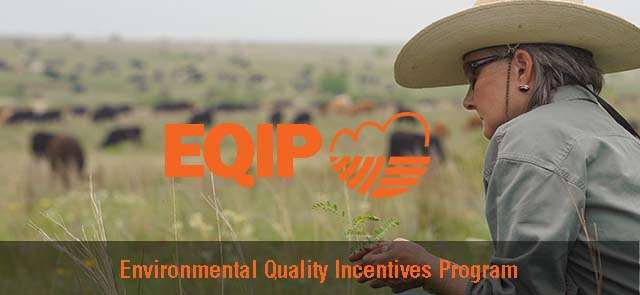
In Oklahoma, agricultural producers in Beaver, Harper and Woodward Counties will be eligible for wildfire relief assistance. Funding will be delivered through NRCS’s Environmental Quality Incentives Program (EQIP) and applications will be accepted until April 21, 2017.

“We stand by Oklahoma’s farmers and ranchers in their recovery from these devastating wildfires,” said Gary O’Neill, State Conservationist for NRCS in Oklahoma. “I encourage affected producers to take full advantage of our financial and technical assistance.”

NRCS will assist local producers with practices such as restoring scorched grazing land, rebuilding fencing, protecting damaged watersheds and implementing various conservation measures to mitigate losses.

EQIP is a voluntary program that provides financial and technical assistance to agricultural producers to help plan and implement conservation practices that address priority local and state resource concerns. Producers must submit a complete program application, establish “farm records”, and other documentation to support eligibility to be considered for financial assistance through EQIP.

Click here to see more...

Trending Video

Wisconsin Corn and Soybean Weed Management Updates and Considerations for 2026 and Beyond

Video: Wisconsin Corn and Soybean Weed Management Updates and Considerations for 2026 and Beyond


Dr. Rodrigo Werle, associate professor and extension weed scientist, UW–Madison, shares the latest updates and future considerations for corn and soybean weed management in Wisconsin. This presentation covers herbicide resistance trends in waterhemp, including newly confirmed cases of HPPD and S-metolachlor resistance, and emphasizes the importance of residual herbicides and strategic tank mixes for consistent control. Rodrigo also introduces upcoming technologies like Vyconic soybeans and new herbicide products, discusses integrated weed management strategies such as planting green with cover crops, and highlights practical recommendations for 2026 and beyond.

At University of Wisconsin–Madison Division of Extension, we are working to integrate accessibility into our web, video, and audio content. If you experience accessibility barriers using our web, audio, or video content or would like to request complete captions, alternative languages, or other alternative formats, please contact us at accessibility@extension.wisc.edu. You will receive a response within 3 business days. There’s no added cost to you for these services.

The University of Wisconsin-Madison Division of Extension provides equal opportunities in employment and programming in compliance with state and federal law.