By Ryan Hanrahan
Bloomberg’s Anuradha Raghu, Sara Bapat, and Agnieszka de Sousa reported that “the Iran war risk premium that swept through crop and fertilizer markets is rapidly evaporating as fears of prolonged supply disruptions fade, easing one of the biggest threats to food inflation.”
“Prices of urea — one of the world’s most important crop nutrients — have plunged more than 30% since mid-April, wiping out the gains triggered by the conflict,” Raghu, Bapat and de Sousa reported. “That’s dragging down prices of corn, wheat and other farm products, with the Bloomberg Agriculture Spot Index tracking 10 of the world’s most-traded crops falling to its lowest level since March 5 on Friday.”
“It’s a dramatic reversal from the early weeks of the war when the effective closure of the Strait of Hormuz choked off about a third of globally traded urea supplies, sending prices soaring and leaving farmers scrambling for alternatives,” Raghu, Bapat and de Sousa reported. “The decline may curb farm input costs and slow the pace of food inflation, but experts caution that energy prices remain elevated, while fertilizer is still sensitive to flare-ups in Middle East tensions.”
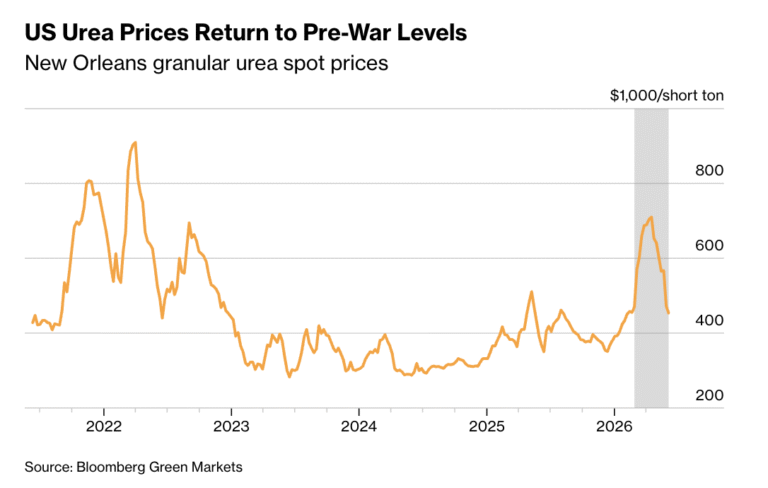
Bloomberg’s Ilena Peng reported that “prices for granular urea in New Orleans dropped to $453.50 per short ton, the lowest level since Feb. 6, according to Friday data from Bloomberg Green Markets. That’s down 36% from mid-April, when markets spiked to the highest levels since 2022.”
Source : illinois.edu