The wheat midge (Sitodiplosis mosellana) is found in most areas around the world wherever wheat is grown. In recent years, significant damage to wheat crops due to wheat midge has been reported in Alberta, Saskatchewan, Manitoba, southern British Columbia, Minnesota, North Dakota and Idaho.
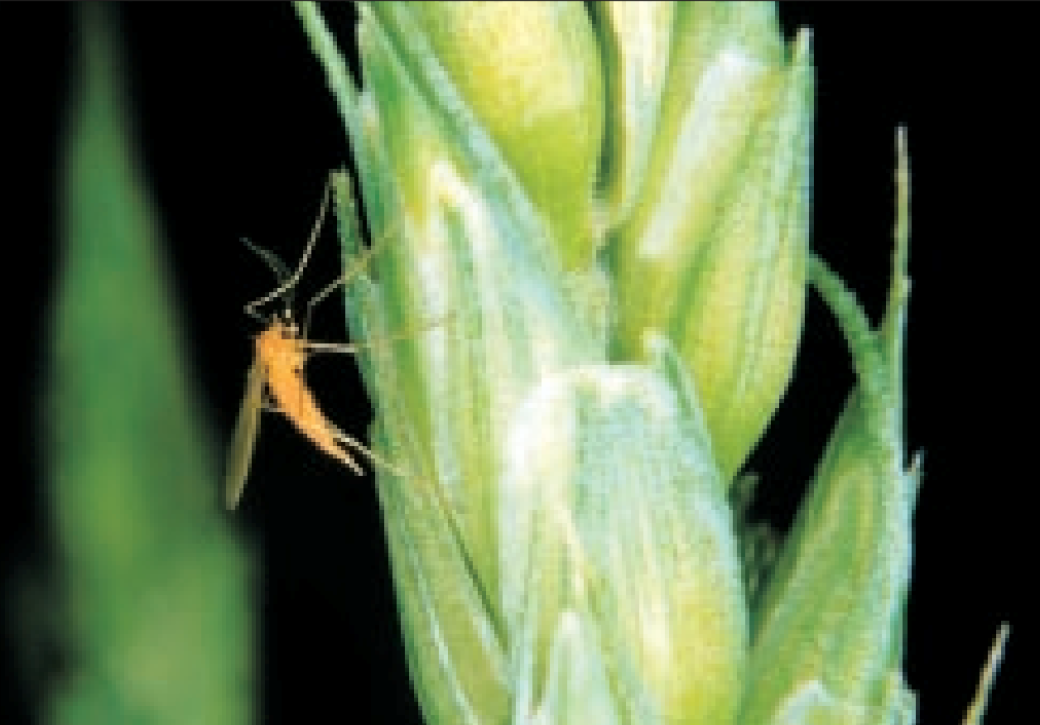
Figure 1. Side view of the wheat midge resting on wheat spikelets
All wheat varieties are currently susceptible to wheat midge, but some are more seriously affected than others. Although the midge also attacks other members of the grass family, including barley, couch grass, intermediate wheat grass and rye, infestations on these plants are usually not serious enough to warrant control.
Research and breeding for wheat midge resistant wheat varieties is underway at the Cereals Research Centre (Agriculture and Agri-Food Canada Winnipeg) and the Crop Development Centre (University of Saskatchewan).
Damage
Infestations of wheat midge can reduce crop yields and lower the grade of the harvested grain.
Midge may exist at low population levels for several years before they become a significant problem. But if conditions become favourable, populations can reach epidemic proportions quickly.
Producers inexperienced with wheat midge infestations often mistake the symptoms of damage and report that frost or drought was responsible for reduced wheat yields or grain quality.
Crop damage occurs during the larval stage. After hatching, the midge larvae feed on the developing wheat kernel, causing it to shrivel, crack and become deformed. As there are no visible, external changes in colour, size or shape of the affected wheat head, the damage to the crop is not readily apparent. Damage can only be detected by inspecting the developing seed within the glumes.
Damage to wheat kernels will vary within a single head. A few kernels may be aborted entirely. Others will not fully develop and will be so small and light, they will pass through the combine with the chaff during harvest. Still others may be only slightly damaged. Some kernels may not be affected at all.
Click here to see more...