Rocky View County using drones to locate the plants
By Diego Flammini
Assistant Editor, North American Content
Farms.com
Alberta’s Rocky View County is taking to the skies to determine the locations of noxious weeds that can harm crops, livestock and humans.
Ashley Stewart, an agriculture service officer with Rocky View County, is using drones to find noxious weeds in places he may otherwise not be able to explore.
“You can go to any ditch site or disturbed areas and find four or five kinds of noxious weeds in the area,” he told CTV. “They definitely cause a lot of financial hardship for farmers, they spend a lot of money trying to get rid of (these weeds)."
Stewart said the drone allows him to not only detect the plants, but their locations and how they’ve spread.
Once the weeds are found, the County’s weed department mows, picks or sprays herbicides to manage them.
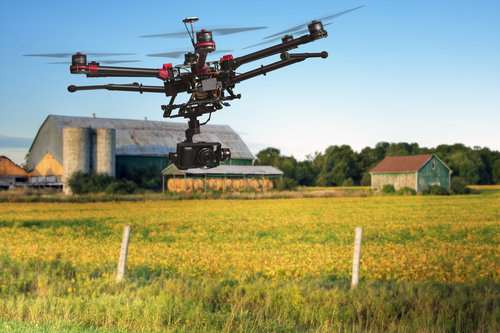
The drones can’t be flown on private property without the owner’s consent. Landowners welcomed the added weed scouting.
“So far, the response from the public has been very positive,” Jeff Fleischer, an agricultural fieldman with Rocky View County said in a release. “Most rural residents understand the importance of fighting noxious weeds, and they’re excited to see the county bringing this technology into battle.”
Currently a regular camera is attached to the drone, but Stewart hopes to upgrade soon.
“We will be able to look at infra-red and near infra-red spectrums,” he told CTV. “Every species of plant gives off a different spectrum, so you would actually be able to fly over a piece of land, take that information and separate the different spectrums and identify if you were looking for a certain plant, it will identify it from the air.”