That number is slightly above the five-year average
By Diego Flammini
Assistant Editor, North American Content
Farms.com
As the 2017 planting season nears completion, American farmers have planted 96 percent of their total soybean crop, according to the USDA’s Weekly Weather and Crop Bulletin for the week of June 11 to 17.
That number is slightly higher than the five-year average of 93 percent.
Producers in Minnesota, North Dakota and South Dakota have fully planted their soybeans, the USDA said.
Farmers in North Carolina have 81 percent of their soybean crop planted, the lowest of the 18 recorded states. That number, however, is up from the five year average of 73 percent.
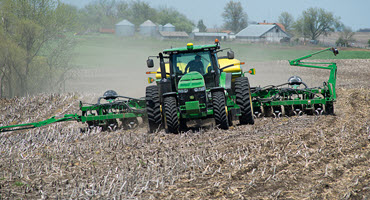
When it comes to emergence, 89 percent of the total soybean crop has emerged.
USDA officials reported soybean crops in Louisiana and South Dakota as 97 percent emerged. In contrast, only 67 percent of North Carolina’s soybeans have emerged. That number is above the state’s five year average of 61 percent but the lowest percentage of the 18 states documented.
USDA representatives rated 57 percent of the total soybean crop as “good” and 10 percent as “excellent.”
Tennessee leads all states in terms of crop quality, with 24 percent of its soybeans rated as “excellent.”
Spring Wheat
Across the United States, 15 percent of the total spring wheat crop has headed, according to the USDA. That number is down 2 percent from the five year average.
On a state-by-state comparison, farmers in South Dakota lead the six recorded states with 65 percent of their spring wheat crop headed. On the other hand, none of Montana’s spring wheat is headed, according to the USDA.
The USDA reports 35 percent of the spring wheat crop is “good.” And 23 percent of the spring wheat crop in Michigan is rated as “excellent,” which is the highest percentage of any state documented.
Winter Wheat
On a national level, 97 percent of the American winter wheat crop has headed, according to the USDA. That number is up from the 95 percent five year average.
The winter wheat crop in Ohio, Illinois, Indiana and eight other states, is fully headed, according to the USDA’s latest figures.
66 percent of Idaho’s winter wheat crop has headed. That number is the lowest of the recorded states, says the USDA.
In other states, producers are harvesting their winter wheat crop.
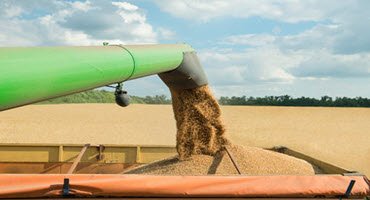
Nationally, farmers have combined 28 percent of the winter wheat crop, according to the USDA.
Farmers in Arizona have harvested 88 percent of their winter wheat crop as of June 18, according to the USDA. That number is well above the 63 percent five-year average.
Producers in California have only harvested 5 percent of their winter wheat crop, according to the USDA’s report. That number is down significantly from the five year average of 61 percent.
Corn
98 percent of the total U.S. corn crop has emerged, according to the USDA’s latest numbers.
The corn crop has fully emerged in six of 18 recorded states including Illinois, Missouri and Nebraska.
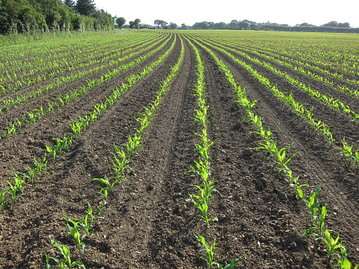
In Pennsylvania, 89 percent of the corn crop has emerged. That number is down from a five-year average of 94 percent, according to the USDA.
Nationally, USDA has ranked more than half of the corn crop as “good,” as of June 18.
USDA ranked 34 percent of Tennessee’s corn crop as “excellent,” which is the largest percentage of any state recorded.
Fieldwork Days
As of June 18, the following states had the most days suitable for fieldwork:
- California, Arizona, New Mexico, Massachusetts, Delaware and Maryland – 7
- Nevada – 6.9
- Utah – 6.8
- Colorado, Oklahoma and Texas – 6.6
The following states had the fewest days suitable for fieldwork:
- Mississippi and Wisconsin – 3.7
- Minnesota – 3.8
- Louisiana – 4.1
- Alabama and Indiana – 4.3
State | Precipitation (inches) | Weather Station |
Illinois | 1.55 | Moline |
Indiana | 1.78 | Indianapolis |
Iowa | 2.70 | Waterloo |
Kentucky | 1.74 | Jackson |
Michigan | 2.65 | Houghton Lake |
Missouri | 2.81 | Kansas City |
New York | 0.91 | Rochester |
Ohio | 3.35 | Mansfield |
Pennsylvania | 1.07 | Erie |
Tennessee | 1.50 | Knoxville |
The next Weekly Weather and Crop Bulletin is scheduled for release on June 27.