Voraxor will be available for the 2022 crop season
By Diego Flammini
Staff Writer
Farms.com
Western Canadian cash crop producers will have another crop protection tool available to them in 2022.
Voraxor, a new herbicide from BASF, received registration from the Pest Management Regulatory Agency.
BASF photo
The product combines two Group 14 active ingredients, said Dan Packer, senior brand manager of herbicides with BASF.
Voraxor has “Kixor, which farmers would know from Heat LQ and has been around for a number of years, and a brand new active ingredient called Tirexor that’s new to the Canadian market,” he told Farms.com.
Tirexor is unique in multiple ways.
It has burndown activity and soil residual activity. It also compliments Kixor, Packer said.
“The combination of the two is nice because they have different water solubility,” he said. “Tirexor has very low water solubility which is why it tends to be more consistent from a residual perspective.”
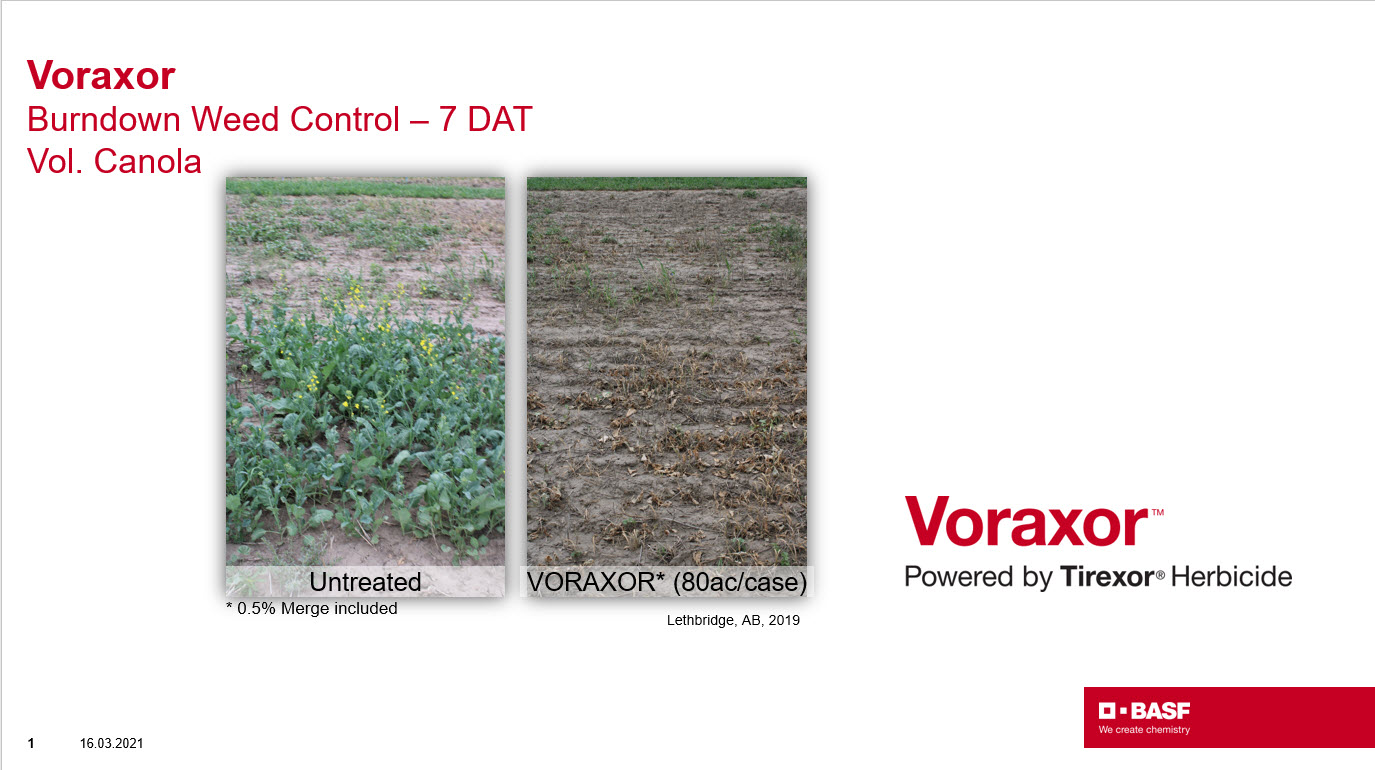
Farmers growing field peas, lentils, soybeans, field corn, wheat and barley can use Voraxor to burn down weeds like kochia, volunteer canola and wild mustard.
The product can also provide residual activity on weeds including wild buckwheat and cleavers.
While Tirexor is new to Canada, farmers in other countries are using BASF products with the active ingredient in it.
“It received registration in Australia in late 2020,” Packer said. “We’ve got great feedback from our Australian colleagues so far.”
Prairie farmers who want to see Voraxor in action will have an opportunity to do so.
BASF will be posting virtual tours online this summer where producers can see how Voraxor and other company products work across the country.