Maze is open from September to Halloween
By Diego Flammini, Farms.com
Terry Fox is arguably one of Canada’s greatest national icons and a farm in Florenceville-Bristol, New Brunswick, is doing its part to celebrate Fox and his Marathon of Hope.
Hunter Brothers Farm, located about 3 hours west from Moncton, has created a 2.5 hectare corn maze that depicts Terry Fox during his Marathon of Hope, which turns 35 this year.
An aerial view of the maze, which took more than a year to plan, shows the great detail that’s gone into its design: From the t-shirt with a maple leaf in the middle to Fox’s prosthetic leg. For the Hunter Brothers, the piece is a way to honour a person they met years ago.
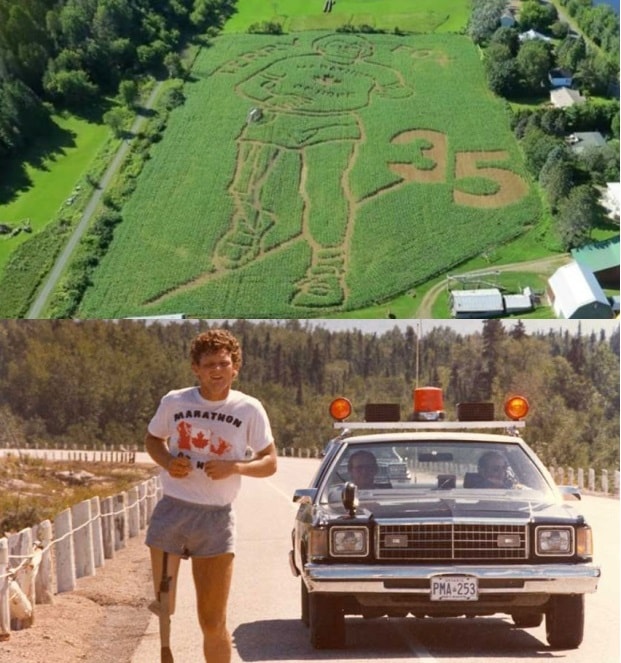
Chip Hunter said during the first marathon, Fox ran by his house and he was able to meet him. The farm has partnered with the Terry Fox Foundation, and despite unfavorable growing conditions during the summer, Shelly Hunter said the work that’s gone into the maze has been worth it. The maze is expected to open on September 15th.
Hunter Brothers Farm is no stranger to large and elaborate corn mazes.
In 2014 they created a maze celebrating the 50th anniversary of The Beatles, in 2012 they created a maze in the shape of a John Deere 125 tractor, and in 2011 celebrated the 65th anniversary of Thomas the Tank Engine.
Terry Fox began his Marathon of Hope in April of 1980 after losing his right leg to cancer at 19-years old. His goal was to run across Canada in the hopes of raising money for cancer research. He left St. John’s, Newfoundland and made it to Thunder Bay, Ontario before chest pains forced him to cancel rest of the run.
Terry Fox passed away in 1981 but Terry Fox Runs have been ongoing ever since, raising millions of dollars for cancer research.