Product also comes with early maturity options
By Diego Flammini
Assistant Editor, North American Content
Farms.com
Dekalb is releasing a new clubroot-resistant canola hybrid for the 2017 growing season.
75-42 CR is the company’s most extensively tested canola hybrid. It combines early maturity options and excellent yield potential, giving farmers in Alberta another method of fighting disease and Mother Nature, according to a release.
"The new 75-42 CR hybrid offers a new, early maturing alternative in the battle against clubroot," Dave Kelner, canola portfolio manager for Monsanto, said in a release. "Central Alberta farmers are often challenged with late harvests. This product will be one of the earliest maturing clubroot-resistant products available in the market. Combined with outstanding yield potential and a well-rounded agronomic package, this product will have a fit on every farm in that area."
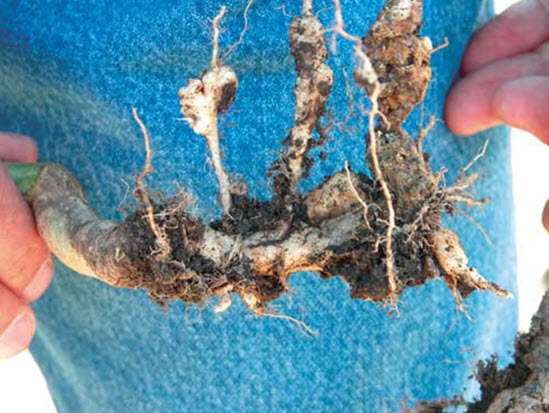
Clubroot on canola.
Photo: Kelly Turkington
The early maturity options allow producers to make the most of limited heat units and give the crop the best chance to reach its full potential.
"(Early maturing hybrids) allow a grower to seed after early spring storms and harvest before the typical frost begins," Kerran Clements, DEKALB field agronomist, said in a release. "Using hybrids with different maturities also helps farmers spread out their harvest and get the crop off at an optimal time."
"With a product like this, there is more peace of mind that you will actually get your crop in and you will get the full potential of the seed because it has been allowed to reach its full maturity," said Erin McDougall, Red Deer-based DEKALB field agronomist.