Trying to reduce usage by 80%
By Diego Flammini, Farms.com
The province of Ontario is looking to take what could be considered the strongest stance in North America when it comes to neonicotinoid usage.
They are looking to protect bees, birds, butterflies and other pollinators by reducing the number of acres planted with neonicotinoid-treated corn and soybean seeds by 80% by 2017. They are doing this through proposed rules that would limit the sale and use of neonics.
The public can comment on the proposal until May 7, 2015 and if everything is approved, would officially take effect on July 1, 2015.
“After extensive consultation, our government is moving forward with the next phase of our comprehensive pollinator health strategy, based on the advice of agricultural leaders,” said Minister of Agriculture, Food and Rural Affairs Jeff Leal. “The proposed regulation released today is a balanced and practical way forward that would ensure farmers have access to treated seeds when needed.”
The decision to propose the limitations comes after consultations in winter of 2014-15. The regulations will protect pollinators and help the agricultural sector and look at other stressors to pollinator health including pesticides, loss of habitat, climate change and diseases.
In winter 2013-14, nearly 58% of Ontario bees died. The general percentage deemed acceptable by people in the bee industry is about 15%.
Bees and other pollinators pollinate about 13% of the agricultural crops in Ontario and are responsible for about $26 million in honey production.
Join the conversation and tell us what you think of Ontario taking a strong stance on neonics.
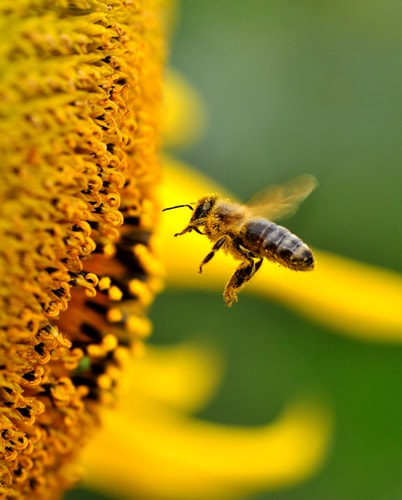
Bee flying towards a plant
Eduard Kyslynskyy
Shutterstock.com