Results are based on seven years of research from Bayer CropScience
By Diego Flammini, Farms.com
Farming and agriculture are examples of industries that can strictly follow the saying “timing is everything”.
If farmers don’t plant at the right time, their crops may not perform well.
If they harvest too soon, they may be robbing themselves of potential profits.
Applications of fungicides also need to follow proper timing to ensure they protect the crops as best they can.
Over a span of seven years, Bayer CropScience has monitored wheat fields in western Canada and determined that wheat growers who apply a fungicide at head timing can not only maximize their yield potential, but can also see better quality in their grains.
“What we wanted to do with this program is look at different products, different timings just to see what kind of response we get from fungicide applications so that we can give better recommendations to growers in terms of what product and what timing to utilize,” said Troy Basaraba, whose agriculture background goes back to 1995 and has been with Bayer CropScience’s market development division since 2008.
Basaraba said fungicides applied at heading time seem to perform at a higher level.
“In general what we’ve been seeing is that applying fungicides at that heading timing seems to be pulling through a little bit stronger and giving us a little bit better yield protection and quality protection than at the flag leaf timing,” he said. “Both are providing positive responses and positive returns on investment.”
Speaking of investments, the farmer turns to their agronomist to determine what they should apply and where.
“In my experience, a good fungicide as the wheat’s heading out is a best practice that I can get excited about,” said Mike Morlock, an agronomist with Cargill from Calgary. “There’s few things in wheat production in season that drive both quality and yield the way a T3 fungicide application does.”
Morlock said keeping a strict timing schedule is crucial to the success of the fungicide.
“It’s something that needs to be planned annually because of the consistency of improving quality and yield,” he said.
Join the conversation and tell us your timing when you apply your T3 fungicides. Will you change your application times?
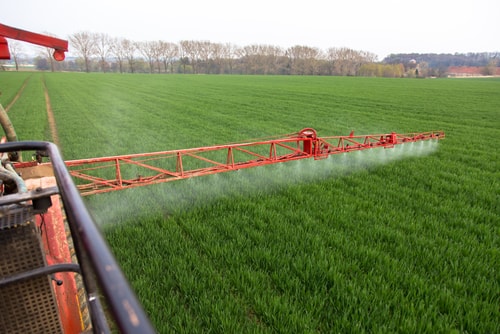
Tractor applying fungicide