Tennessee and North Carolina lead the country in that category
By Diego Flammini
News Reporter
Farms.com
American farmers has surpassed the halfway point for corn harvest completion, according to the U.S. Department of Agriculture’s (USDA) Weekly Weather and Crop Bulletin.
Farmers have harvested 54 per cent of the total American corn crop as of Oct. 29. That number is up from 38 percent last week, but behind the 73 percent harvest completion recorded at this time last year.
Producers from Tennessee and North Carolina lead the nation in terms of corn harvest completion, having combined 97 percent of their respective crops.
Farmers in Wisconsin have the lowest recorded harvest completion, only having finished 25 percent of their harvest. But that number is up from 15 percent last week.
The USDA also ranked 50 percent of the total U.S. corn crop as good.
Soybeans
Soybean harvest jumped by 13 percent in one week, according to the USDA.
Farmers have completed 83 percent of the total U.S. soybean harvest as of Oct. 29. That number is up from 70 percent last week.
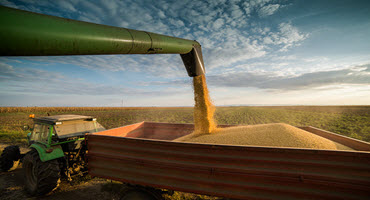
Growers in Louisiana have finished combining their soybeans.
North Carolina soybean producers have completed 41 percent of their soybean harvest. That number is the lowest of the 18 states recorded but is up from 34 percent last week.
Wheat
Winter wheat emergence in the U.S. rose by 13 percent since last week, the USDA reports.
65 percent of the total American winter wheat crop has emerged. That number is up from 52 percent last week, but down from the 69 percent emergence recorded at this time last year.
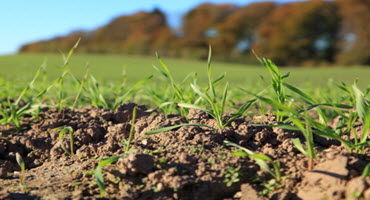
In South Dakota, 91 percent of the winter wheat crop has emerged. That number is up from 80 percent last week and is the highest in the country, according to the USDA.
Only 5 percent of the winter wheat crop in California has emerged. That number is up from 1 percent last week and the lowest in the U.S.
The USDA ranked 43 percent of the winter wheat as good.
Suitable fieldwork days
The states with the most suitable fieldwork days for the week ending Oct. 29, according to the USDA, were:
- Nevada, Utah and Arizona – 7 days
The states with the fewest suitable fieldwork days for the same week were:
- Michigan – 3 days
- Maine – 3.3 days
- Indiana and Ohio – 3.7 days
Weekly precipitation levels
State | Weekly Precipitation (in inches) | Weather Station |
Illinois | 1.97 | Chicago/O’Hare |
Indiana | 2.16 | Evansville |
Iowa | 0.52 | Burlington |
Kentucky | 2.08 | Jackson |
Michigan | 5.46 | Muskegon |
Missouri | 0.55 | Columbia/Saint Louis |
New York | 1.27 | Buffalo |
Pennsylvania | 1.41 | Pittsburgh |
Tennessee | 2.81 | Nashville |
The next Weekly Weather and Crop Bulletin will be released on Tues., Nov. 7.