Wheat crop already showing signs of stripe rust
By Diego Flammini, Farms.com
Specialists from Texas A&M AgriLife Extension Service say the wheat crop for 2015 could be at risk for an epidemic of infections.
Dr. Clark Neely, AgriLife Extension small grains and oilseed specialist from College Station, Texas, said he and others have been keeping an eye on wheat ranging from South Texas, to Oklahoma and into the San Angelo, Chillicothe Abilene.
“Right now, stripe rust appears to be more prevalent than leaf rust, and in some cases, it has started to move into the upper canopy,” Neely said in an article on AgriLife Today. The first case was reported January 29th in Northeast Texas. Neely said if stripe rust shows up before March, it could mean an epidemic is imminent.
Neely estimated that 70% of yield in areas with stripe rust could be lost if producers don’t take the proper precautions.
Stripe rust, which can also go by the name yellow rust, is caused by a fungus named Puccinia striiformis. It can transfer to crops if someone has it on their clothes but air currents seem to be the main way for stripe rust to travel.
If infected, it could take about a week to show symptoms. A yellow stripe will appear and run the length of the leaf but stems can also be infected. Stripe rust can be prevented by using proper fungicides and practicing good crop rotation.
Join the conversation and tell us if you’ve ever had to combat stripe rust. What measures did you take and what kind of impact did it have on your operation?
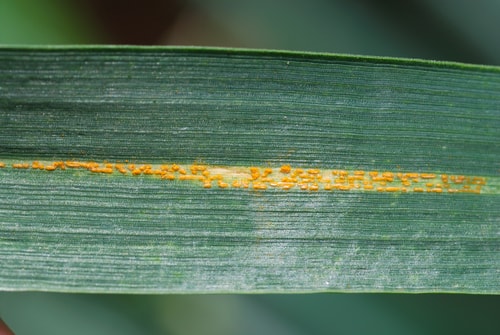
Stripe rust on a leaf
Damien Herde
Shutterstock.com