Farms.com Home   News

California's Pima Cotton Industry Withers

Pima cotton - valued for its high-quality strong fibers - made a splash in California's San Joaquin Valley in the 1990s, reports Hiroko Tabuchi in the New York Times.

“It's a just-add-water kind of location,” said Robert B. Hutmacher, a cotton specialist at the University of California's Division of Agriculture and Natural Resources. “Of course, just-add-water used to be much easier to achieve.”
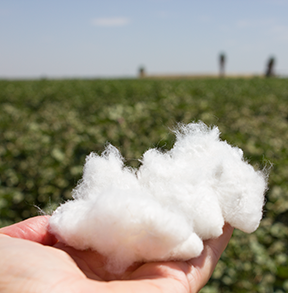
Pima cotton

Pima cotton

Durable and lustrous, Pima cotton became the fiber of choice for premium shirts and bed sheets. Long hot, rain-free summers made the Central Valley an ideal location for the crop. But environmentalists wondered whether it made sense to plant the thirsty crop in the dry San Joaquin Valley, particularly one used for luxury clothing and bedding, not food, the article said.

“It's the world's finest cotton,” said Jim Neufeld, a third-generation cotton farmer in Wasco. This season, he planted 250 acres of cotton, down from a peak of 11,000 acres in the 1990s. “It simply doesn't fit into today's environment."

Source:ncsu.edu


Trending Video

Spider Mite Control with Predatory Mites (Neoseiulus californicus)

Video: Spider Mite Control with Predatory Mites (Neoseiulus californicus)

The predatory mite Neoseiulus californicus is an effective natural enemy of various species of spider mites, including the two-spotted spider mite (Tetranychus urticae). As a key player in biological pest control, this predator helps growers protect their crops sustainably.

How does Neoseiulus californicus work?

•Specializes in targeting the larval and nymphal stages of spider mites.

•Also consumes spider mite eggs, ensuring population control.

•Detects prey through webbing and leaf damage rather than sight.

•Feeds by sucking out the contents of its prey.

Why use Neoseiulus californicus for spider mite control?

•Highly adaptable to different environments, including warm and dry conditions.

•Works as both a preventive and curative solution for spider mite infestations.

•Complements other predatory mites, such as Phytoseiulus persimilis, for integrated pest management (IPM).

•A natural, sustainable alternative to chemical pesticides.