By Josh Maples and David Anderson et.al
Big news broke over the weekend as Mexico notified the USDA of a positive detection of New World screwworm in a cow in the southern Mexico state of Chiapas. The USDA-APHIS announcement (available here) noted the case was identified at an inspection checkpoint near the border with Guatemala. As a result, USDA-APHIS announced “APHIS is temporarily suspending the importation of ruminants, including live cattle and bison, from Mexico.”
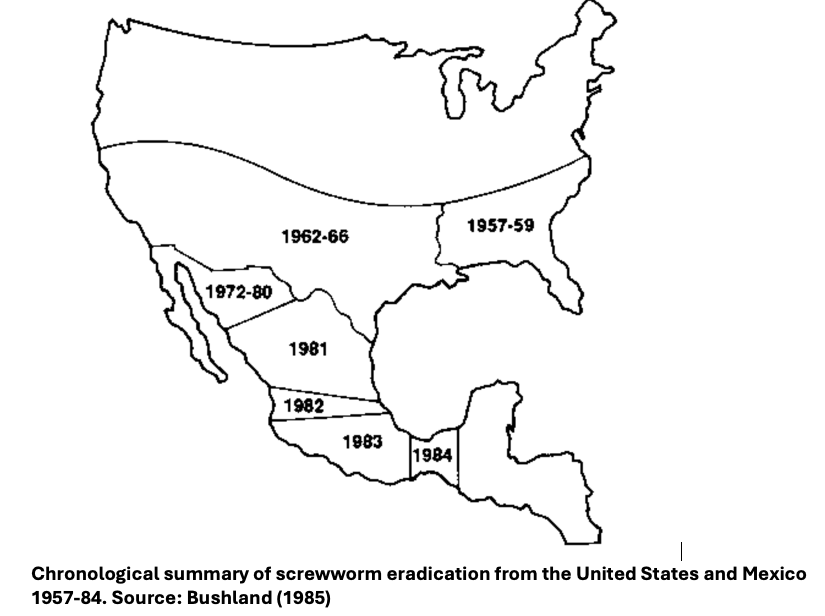
The screwworm is an issue with which the cattle industry has grappled before. The map above shows when the screwworm was eradicated from various regions in the 1950s-1980s. Eradication efforts were driven by the release of tens of millions of sterile screwworm male flies to reduce reproduction. For anyone interested in more historical context, here is a link to an article posted by the Foreign Agriculture Organization.
There are many potential impacts of this announcement and also many unknowns. A few unknowns that will be key in potential impacts are: whether additional cases are identified (and where); how long the import ban lasts; and will the ban continue to affect all imported cattle from Mexico or just those from specific regions.
The market impacts of this announcement are likely to be obvious in the near-term. The U.S. imports a significant number of feeder cattle from Mexico, and that is now temporarily suspended. Roughly 5 percent of feedlot placements this year have been imported feeder cattle from Mexico. The fall months are a seasonally high import period, as shown in the chart below. If the ban on imports of feeder cattle lasts awhile, it would mean a lower supply of feeder cattle going into feedlots. Tight feeder cattle supplies would get tighter which would mean more support for prices.
There will be more information about this topic released over the coming days and weeks. Right now there are probably more questions than answers. Feeder cattle futures markets were up as much as $4 per CWT at some points in trading today and closed the day up about $1 per CWT.
Source : osu.edu