It might sound crazy to think that a product that’s already in 94 percent of U.S. households has room to grow, but the numbers indicate it’s true. Here’s what we’re talking about:
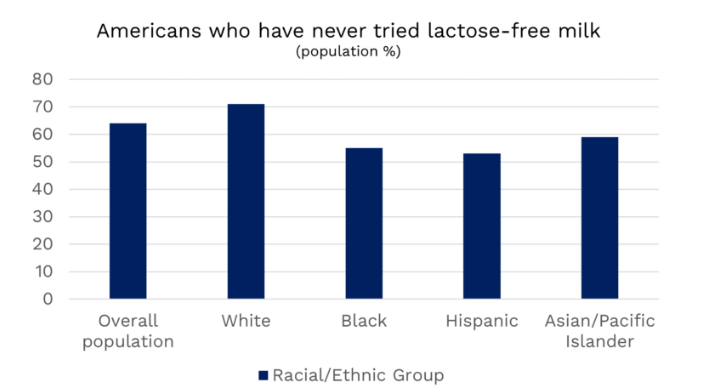
This comes from a study done by the International Food Information Council, supported by NMPF and the International Dairy Foods Association, on consumption habits among diverse U.S. populations. What’s striking is that, even though self-reported lactose intolerance among non-White populations runs at roughly 30 percent (according to the same study), clear majorities among Black, Hispanic and Asian/Pacific Islander populations haven’t even tried milk that addresses that intolerance, forgoing an option that provides 13 essential nutrients. And presumably, some of those non-milk drinkers are in that 6 percent who don’t have it in their refrigerators.
(And conversely, some of that 94 percent must include lactose-intolerant consumers. Are they taking lactase pills to aid in digestion? Are other household members the milk drinkers? There’s still much to know.)
The point is this: At a time when the committee drafting recommendations for the next Dietary Guidelines for Americans is looking at nutrition science and contemplating recommendations that are appropriate to the lived experiences of a wide range of Americans, it’s important to meet people where they are. For the overwhelming majority of them, that means a place where they have milk in the fridge. Those who aren’t there are in a place where awareness of the numerous ways to benefit from dairy nutrition, regardless of lactose tolerance, isn’t what it needs to be.
Click here to see more...