Farms.com Home   News

Direct-to-Consumer Beef Sales

By Myndi and Jason Krafft et.al

“California girls.” Does that bring to mind blonde hair and sandy beaches?
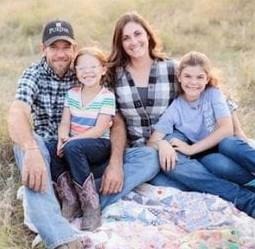
Left to right: Jason, Kensi, Myndi and Kinley Krafft

Today we’ll meet a young woman from California with interests beyond the beachfront. She developed an interest in agriculture, married a Kansan, and made her way to the Sunflower State where the couple is adding value to their family beef operation through direct-to-consumer marketing.

Myndi and Jason Krafft are the owners of Krafft Beef in Phillips County. Jason is a fifth-generation farmer and rancher. He grew up farming with his dad, grandfather, and uncle and was active in 4-H and FFA. He made the livestock judging team at Colby Community College and then the team at Cal Poly in California. He met Myndi in an animal science class.

Myndi had grown up in southern California. Her family had a garden and backyard chickens. Her great grandfather had farmed near Enid, Okla. and Liberal, Kan.

“I remembered his stories and I became interested in where our food comes from,” Myndi said. She studied agriculture at Cal Poly, met and married Jason, and earned her ag teaching credentials plus a masters degree.

“I was an ag teacher for 10 years in the bay area,” Myndi said. She team-taught soil chemistry and a sustainable ag biology class which counted toward the students’ science requirements. “Agriculture is science,” Myndi said.

Source : k-state.edu

Trending Video

Evolution of Beef Cattle Farming

Video: Evolution of Beef Cattle Farming

The Clear Conversations podcast took to the road for a special episode recorded in Nashville during CattleCon, bringing listeners straight into the heart of the cattle industry. Host Tracy Sellers welcomed rancher Steve Wooten of Beatty Canyon Ranch in Colorado for a wide-ranging discussion that blended family history and sustainability, particularly as it relates to the future of beef production.

Sustainability emerged as a central theme of the conversation, a word that Wooten acknowledges can mean very different things depending on who you ask. For him, sustainability starts with the soil. Healthy soil produces healthy grass, which supports efficient cattle capable of producing year after year with minimal external inputs. It’s an approach that equally considers vegetation, animal efficiency, and long-term profitability.

That philosophy aligned naturally with Wooten’s involvement in the U.S. Roundtable for Sustainable Beef, where he served as a representative for the Colorado Cattlemen’s Association. The roundtable brings together the entire beef supply chain—from producers to retailers—along with universities, NGOs, and allied industries. Its goal is not regulation, Wooten emphasized, but collaboration, shared learning, and continuous improvement.