Farms.com Home   News

Drones May Improve Agricultural Practices, Increase Efficiency

The use of drones has evolved from a hobby to military use and now to agriculture. Farmers are using drones to inspect their crops, detect diseases and deliver chemicals.
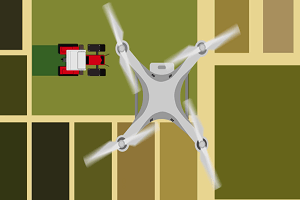


This technology is expected to increase crop yields and save growers time and money. The Association for Unmanned Vehicle Systems International predicts that 80 percent of drones in the commercial sector will be used for agriculture, according to USA Today.

Drones are a part of a practice known as “precision agriculture,” using big data to improve agricultural practices and efficiency. This technology is used alongside unmanned tractors and satellite technology to manage crops on a field-by-field basis. The use of drones already has increased yield confidence and reduced crop damage.

Drones are still in their infancy in terms of working with big-data agriculture. They are expected to collect more diverse and higher levels of data in the future, including tracking individual crops and inch-by-inch resolution of soil health.

Click here to see more...

Trending Video

Spider Mite Control with Predatory Mites (Neoseiulus californicus)

Video: Spider Mite Control with Predatory Mites (Neoseiulus californicus)

The predatory mite Neoseiulus californicus is an effective natural enemy of various species of spider mites, including the two-spotted spider mite (Tetranychus urticae). As a key player in biological pest control, this predator helps growers protect their crops sustainably.

How does Neoseiulus californicus work?

•Specializes in targeting the larval and nymphal stages of spider mites.

•Also consumes spider mite eggs, ensuring population control.

•Detects prey through webbing and leaf damage rather than sight.

•Feeds by sucking out the contents of its prey.

Why use Neoseiulus californicus for spider mite control?

•Highly adaptable to different environments, including warm and dry conditions.

•Works as both a preventive and curative solution for spider mite infestations.

•Complements other predatory mites, such as Phytoseiulus persimilis, for integrated pest management (IPM).

•A natural, sustainable alternative to chemical pesticides.