Flies are numerous this summer. They drive us all nuts, but are they a problem beyond our annoyance?
The Livestock and Poultry Environmental learning Community recently hosted a webinar titled Vector Control on Livestock Operations and the answer is yes, flies are more than just a nuisance on livestock operations.
Flies can carry and transfer diseases between animals. Additionally, they can create wounds where other diseases can enter. So, what can we do about them beyond swatting them?
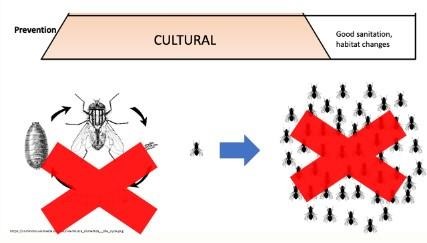
Well, the key to fly control is getting started before the flies are a problem. That means that if you’re having problems with flies, you’re really too late! Because fly populations increase exponentially, it’s critical to minimize their ability to reproduce.
Prevention is the Best Avenue
We can minimize reproduction by reducing access to food and sites for laying eggs. This means keeping the farm clean and maintained is more than just about keeping things pretty. It’s important to seal food containers where possible and keep pens clean and dry.
Pesticides for Control
Another option is the use of insecticides. Since some species of flies respond to certain insecticides differently, it is important to identify the fly and its habitat before choosing an insecticide and method of application. In feedlot and confined locations area sprays, residual sprays, larvicides, baits and certain feedthroughs are often used to control house flies and stable flies. For pasture fly control, back rubbers/oilers and dust bags are often placed near water tanks or mineral stations where animals will use them on free choice basis. Pour-on products are often applied before animals are sent to pasture. Some of the products are absorbed through the skin (systemic) and work internally, while others work by contact. Feedthroughs can also be used to manage pasture flies. Animal sprays and insecticide ear tags are also very popular options. More information on fly control options is available in Horn flies and Control Options.
Source : unl.edu