By Michael Lucibella
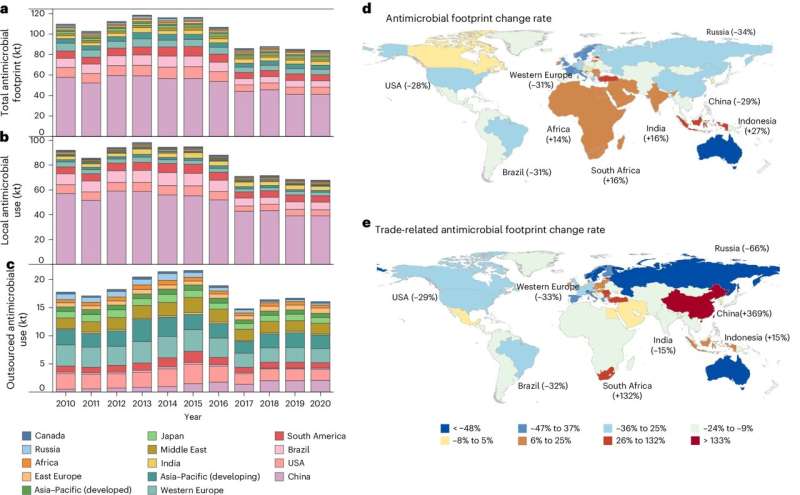
After decades of growth, the use of antimicrobials—including antibiotics—in livestock peaked in 2013 and then dropped by nearly a third by 2020, finds a major new study led by UCL researchers. The decline is positive, as overusing antimicrobials in animals can create drug-resistant bacteria, which can lead to human harm. However, despite this trend, the study also found that richer developed countries continue to drive demand for antimicrobial-heavy products by importing large quantities of foods and products from emerging economies that still use farms with high-levels of antimicrobials.
The research, published in Nature Sustainability, is the most detailed analysis yet of how antimicrobials are used in farming and manufacturing worldwide—and how international trade spreads that impact. It looked at data from 2010 to 2020 to calculate each country's "antimicrobial footprint," similar to a carbon footprint, showing how much is used to make the products we consume.
Main findings
- Global antimicrobial use in livestock peaked at 118,600 metric tons in 2013, then fell to 84,000 metric tons by 2020.
- The sharpest drop came after the 2016 UN meeting on antimicrobial resistance, which pushed many countries to adopt stricter rules.
- On average, use per person fell from 15.6 grams in 2010 to 10.6 grams in 2020.
- Big reductions came from China and the US, which together account for about 60% of global use. China cut its use by 29%, and the US by 28%.
Click here to see more...