Farms.com Home   News

Have You Seen These Abnormal Corn Ears?

By Pam Knox

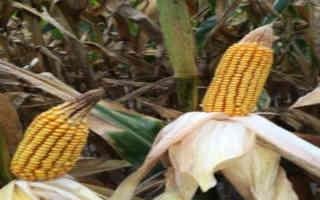
The Indiana PrairieFarmer posted an interesting slideshow this week describing the different ways that ears of corn can become deformed. Of the thirteen ways listed, most of them are related at least in part to unusual temperature or drought stresses that occurred at specific points in the development of the ear. You can view the slide show and read about the stressors that cause each abnormality here.
crop

Source : uga.edu

Trending Video

Agriculture Secretary Rollins Speaks at American Farm Bureau Federation Convention in Anaheim

Video: Agriculture Secretary Rollins Speaks at American Farm Bureau Federation Convention in Anaheim

One of the highlights at the 2026 American Farm Bureau Federation Convention in Anaheim, California, was an address by U.S. Secretary of Agriculture Brooke Rollins. During her remarks, she thanked America’s farmers and ranchers and said the Trump Administration is fully aware that food security is national security.

She also acknowledged the challenging times in Farm Country with low commodity prices and high input costs and said that’s why the President stepped in to help with the recent Bridge Assistance Program.

Montana Farm Bureau Federation Executive Vice President Scott Kulbeck says that Farm Bureau members are appreciative of the help and looks forward to working with the American Farm Bureau Federation and its presence in Washington, DC to keep farmers and ranchers in business.

Secretary Rollins said the Trump Administration is also committed to helping ranchers build back America’s cattle herd while also providing more high-quality U.S. beef at the meat case for consumers.

And she also announced more assistance for specialty crop producers who only received a fraction of the $12 billion Farmer Bridge Assistance (FBA).

It’s important to note that producers who qualify for Farmer Bridge Assistance can expect the Farm Service Agency to start issuing payments in late February. For more information, farmers and ranchers are encouraged to contact their local USDA Service Center.