Increasing price guarantees for major crops, as some farm groups and legislators are proposing, would make it harder for young farmers – those aged 35 or younger – to compete against larger, legacy farmers.
Price guarantees for major crops like cotton and rice are paid only on lands with a crop production history, or on lands with “base acres,” a limited number of acres set by the Department of Agriculture where farmers can receive price guarantees for covered crops. Younger farmers are less likely to grow these major crops and much less likely to own lands with the coveted base acres, making it even harder for them to compete.
Young farmers also tend to have smaller farms. Because crop subsidy payments are tied to production, even those who grow “covered commodities” like cotton and rice on base acres receive smaller payments than their larger neighbors. While the average farm is 445 acres, the average farm run by a young farmer is less than 50 acres.
The USDA defines a young farmer as someone 35 years old or younger, and a new and beginning farmer is anyone who has farmed for 10 years or less. USDA estimates that 80 percent of new and beginning farmers are also young farmers.
The USDA and many members of Congress have warned that the average age of farmers is going up, so it’s important that policymakers support the next generation.
How the current system works
Farmers growing cotton, rice and other covered commodities get a payment that covers the difference between the price guarantee in the farm bill and the market price. Farmers can only receive a payment on base acres.
In 1996, Congress originally linked base acres to crops planted between 1981 and 1985. But it used subsequent farm bills to change how base acres are calculated. The idea of payments for base acres was designed to encourage farmers to make their planting decisions based upon market conditions, not government programs.
Most young farmers do not have base acres
Eligibility to collect subsidies on land with base acres makes farmland with these acres more expensive, so young and other “limited resource farmers” often cannot afford to buy or rent farmland with base acres. Almost 60 percent of young farmers said finding affordable land is “very or extremely” challenging in a recent survey.
Some farm groups and legislators have proposed increasing price guarantees for major crops. But the higher price guarantees would mostly benefit fewer than 6,000 farms in a few states, EWG has previously found.
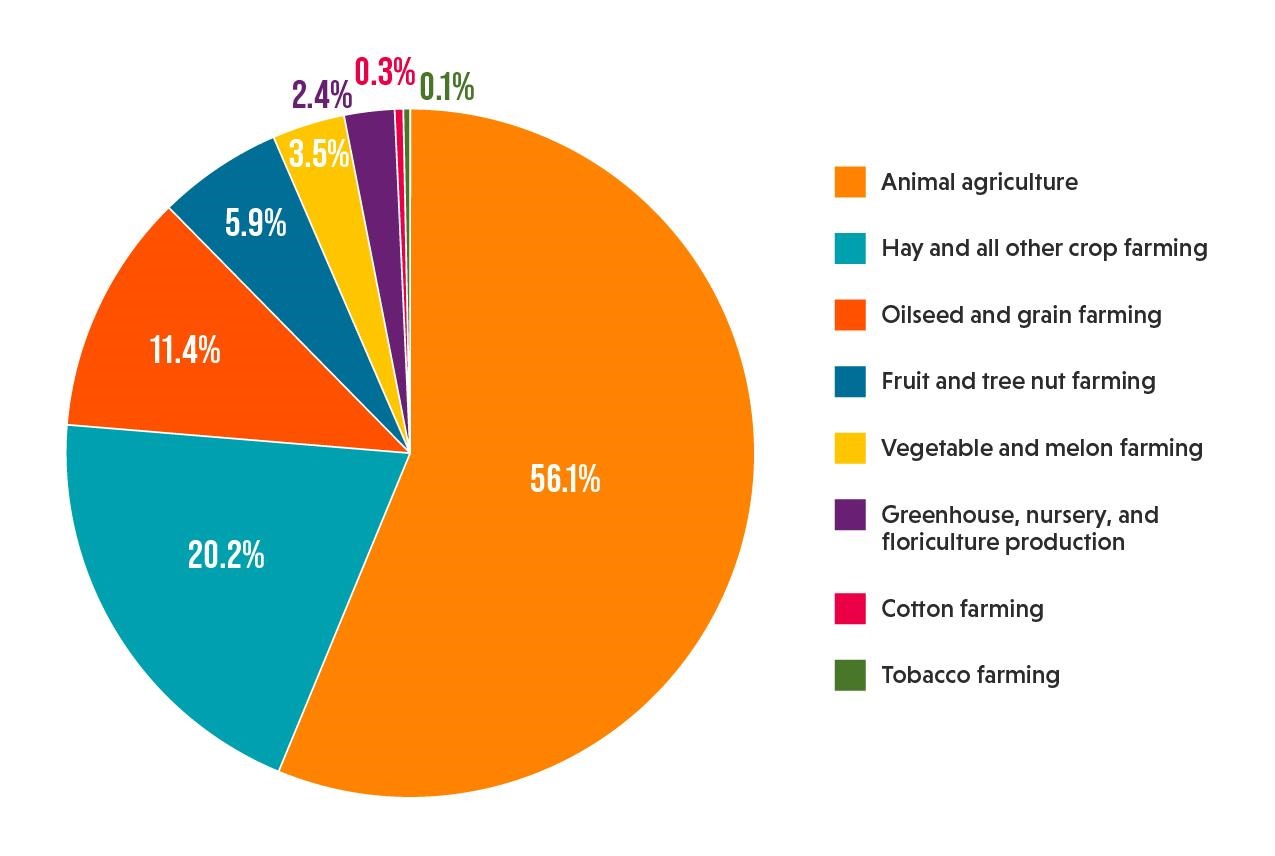
Most new and beginning farmers – 88.1 percent – don’t farm commodities that would benefit from increased price guarantees, as this pie chart shows:
Click here to see more...